

Your Faith Journey with EWTN
As we deepen our relationship with the Eternal Word, Jesus Christ, we grow in grace and are transformed by His love and mercy.
c.1042–July 10, 1086
Patron Saint of Denmark

St. Canute IV, also known as Canute the Holy, was a Danish king and martyr whose reign sought to strengthen Christianity and justice in his kingdom. Born around the mid-eleventh century, St. Canute ascended to the throne in 1080. He set out to establish peace, defend the Church, and guide his people toward holiness.
St. Canute promoted the observance of Christian Holy Days, protected the rights of clergy, and enforced the payment of tithes to sustain the Church’s mission.
St. Canute believed in justice. He planned an invasion of England, where he envisioned reclaiming the throne he felt belonged to him as a descendant of Canute the Great, who had ruled both England and Denmark. His tax policies, intended to fund these failed pursuits, and the enforced Church tithing angered the peasants, who eventually revolted.
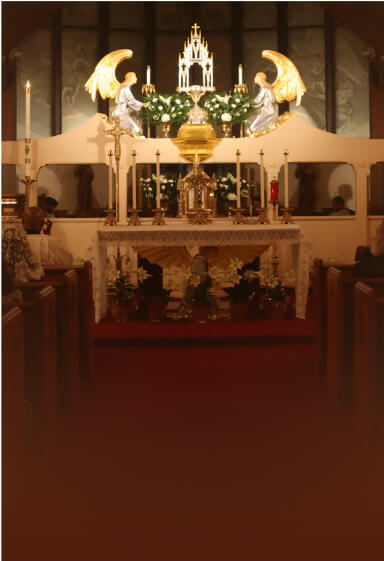
In 1086, St. Canute sensed his end was near. He sought refuge in St. Alban’s Church in Odense, where he gathered with his companions to pray. A peasant mob stormed the church and struck him down before the altar, along with his brother Benedict and 17 followers.
Soon after St. Canute’s death, the region suffered a great famine, and some believed it was a punishment for the slaying of the holy king. Pilgrims who came to venerate him reported healing miracles, which accelerated his canonization.
St. Canute was canonized in 1101 by Pope Paschal II, becoming Denmark’s first royal saint and its national patron.
St. Canute is called “the Holy” because he was a devout Christian king who suffered martyrdom for his faith. He had a strong commitment to the Church and charitable works, including building churches and supporting the clergy. He died praying before the altar after having received the Holy Eucharist. Some saw him as a virtuous and just ruler. He enacted laws to ensure justice and protect the poor and weak. His martyrdom and the reported miracles that followed his death led to his canonization.
St. Canute introduced reforms to centralize power and strengthen the Church. He curbed the power of the earls, enforced the collection of tithes to support the clergy, built numerous churches, and promoted the veneration of saints. St. Canute supported stricter observance of Holy Days to foster a climate of holiness throughout the kingdom. He funded the construction and repair of many churches and monasteries. St. Canute’s policies led to his assassination in 1086, as he faced a rebellion from aristocrats who opposed his reforms and incited the peasants to revolt.
St. Canute’s relics have been moved multiple times throughout history. St. Canute and his brother Benedict were buried over the site of their martyrdom. Their relics were first housed in shrines. People quickly began making pilgrimages to the site. During the Protestant Reformation, the relics were walled up, then later recovered, and displayed. Today, the wooden coffins containing the remains of both brothers are displayed upright in the crypt of St. Canute’s Cathedral in Odense, Denmark, as a significant piece of national heritage.
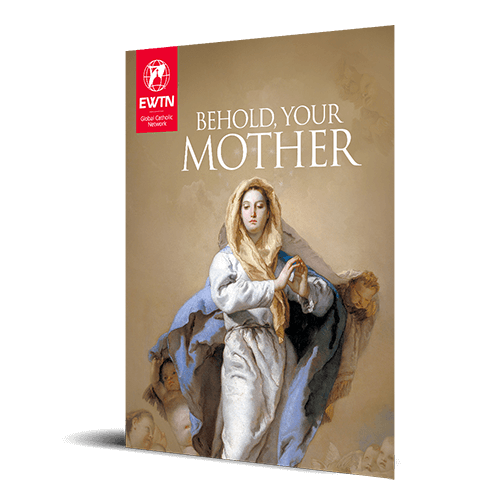
We hope this special eBook will draw you closer to our Blessed Mother and her Son, Jesus Christ. We trust that the following pages will bring your heart under her mantle, as we share a few of the beautiful and befitting names bestowed upon the Blessed Virgin Mary.
As we deepen our relationship with the Eternal Word, Jesus Christ, we grow in grace and are transformed by His love and mercy.
STEP 1
We’re here to serve you. Let us help you complete your gift with confidence.

Send a message to Mission Advancement.

Guidance for DAFs, stock, IRA, and more.

Manage your gifts and preferences.