


Your Faith Journey with EWTN
As we deepen our relationship with the Eternal Word, Jesus Christ, we grow in grace and are transformed by His love and mercy.
c. 726–802 or 804
Patron Saint of the Slovens

St. Paulinus of Aquileia (c. 726–802/804), also known as Paulinus II, was a bishop, theologian, poet, and missionary whose influence helped shape the Christianization of Central Europe. Born near Cividale in northeastern Italy, St. Paulinus was raised in a farming family but showed early brilliance in scholarship and teaching. His intellectual gifts brought him to the attention of Charlemagne, who invited him to serve at his court as the royal master of grammar and a trusted adviser.
In 787, St. Paulinus was appointed Patriarch of Aquileia, a role he held until his death. As bishop, he became a leading voice in theological debates, especially against the heresy of Adoptionism, which falsely claimed that Christ was the adopted Son of God. Adoptionists denied the eternal divine nature of Jesus, arguing instead that he earned his divine status. His efforts, along with those of others at the councils, led to the condemnation of Adoptionism. St. Paulinus supported the Filioque clause in the Nicene Creed, zealously advocating its introduction and acceptance to clarify the full divinity of Christ.
As a missionary bishop, St. Paulinus sent evangelists to the Avars and Alpine Slavs, promoting peaceful conversion and pastoral care. For this, he is honored as the “Apostle of the Slovenes.”
St. Paulinus wrote about his theology, faith, and personal experiences in hymns, theological treatises, and poetry. He died on January 11, around 802, in Cividale. He is remembered for his courage in defending the faith, his dedication to education, and his missionary zeal.
Adoptionism was a heresy against Church teaching, stating Jesus was born as a human and was “adopted” as the Son of God at a specific point in his life. St. Paulinus played a prominent role in suppressing this heresy. He contributed to the Libellus sacrosyllabus, a book arguing against Adoptionism, on behalf of the Italian bishops. Through his efforts, the adoptionism heresy was officially condemned, and several documents refuting the doctrine were produced.
St. Paulinus’ great desire to evangelize conquered peoples peacefully with appeals that touched the heart led to his title the “Apostle of the Slovenes”. He arranged for the peaceful Christianization of the Alpine Slavs, including the Slovenes, who were subjects of the Holy Roman Empire after Charlemagne’s conquests. After the military campaigns, St. Paulinus convened a synod that decided the new subjects would be evangelized peacefully, using methods that appealed to reason and heart rather than force. Although the full missionary efforts began in earnest after his death, his policies laid the groundwork for the region’s Christianization.
As a key figure in the Carolingian Renaissance, St. Paulinus used his writings to combat heresy, offer spiritual guidance, and contribute to the liturgical and historical record of his time. Among his theological writings are a short treatise refuting the heresy of Adoptionism, a three-book collection against the Adoptionist leader Felix of Urgel, and a book of exhortations offering spiritual guidance on Christian perfection, penance, and the avoidance of vices such as pride. St. Paulinus’s poetic works include themes on the resurrection of Lazarus, the tragic death of a close friend, and his personal profession of faith. He also composed eight hymns for use in his church during Christmas, Easter, and other feasts. Of great historical value are his records on the acts of several councils.
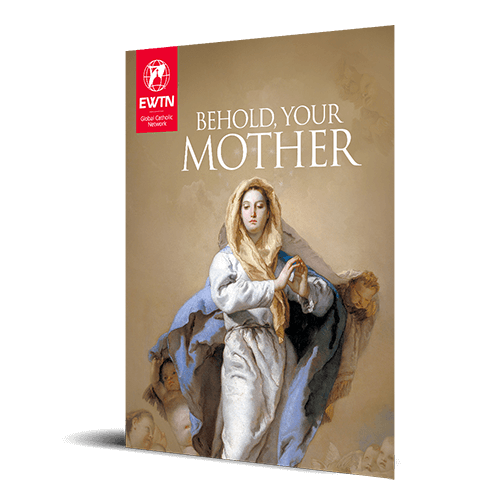
We hope this special eBook will draw you closer to our Blessed Mother and her Son, Jesus Christ. We trust that the following pages will bring your heart under her mantle, as we share a few of the beautiful and befitting names bestowed upon the Blessed Virgin Mary.
As we deepen our relationship with the Eternal Word, Jesus Christ, we grow in grace and are transformed by His love and mercy.
STEP 1
We’re here to serve you. Let us help you complete your gift with confidence.

Send a message to Mission Advancement.

Guidance for DAFs, stock, IRA, and more.

Manage your gifts and preferences.