

Your Faith Journey with EWTN
As we deepen our relationship with the Eternal Word, Jesus Christ, we grow in grace and are transformed by His love and mercy.
St. Basil, 330 A.D.–January 2, 379
St. Gregory, 329 A.D.–January 25, 390
St. Basil: Patron Saint of Russia, Cappadocia, hospital administrators, reformers, monks, education, exorcism, liturgists
St. Gregory: Patron Saint of Poets, students, teachers, orthodoxy, and Nazianzus, Türkiye

On January 2, the Church honors St. Basil the Great and St. Gregory Nazianzus, two of the towering Fathers of the fourth century. As bishops and theologians, they labored throughout their lives to defend orthodox Christianity. They made significant contributions to the Church in clarifying doctrine, developing Eastern monasticism, and establishing new social service structures.
St. Basil was born around 329 A.D. in Caesarea, Cappadocia (in modern-day Türkiye). St. Basil felt drawn to the contemplative life. He traveled to Egypt, Syria, and Palestine to learn from the ascetics. He founded monastic communities, and his model of monastic rule had a lasting influence on Eastern monasticism. Dedicated to helping the poor, St. Basil established a group of hospitals, orphanages, and shelters that became known as “Basiliad.”
Gregory of Nazianzus was born about 330 A.D. near Nazianzus, also in Cappadocia, into a family devoted to faith. He and St. Basil became close friends during their studies in Athens, and Gregory joined St. Basil’s exploration of monasticism. Responding to the Church’s pressing needs, St. Gregory later accepted priestly ordination and served as bishop under St. Basil.
The two saints led the Church as defenders of the doctrine of the Trinity against heresies like Arianism. They wrote theological treatises, preached true doctrine, and engaged in public debates where they defeated Arian theologians.
Later, the emperor sent St. Gregory to Constantinople to defend orthodoxy and oversee the bishopric that had fallen into disorder. St. Gregory’s eloquence, clarity in Trinitarian theology, and leadership in tumultuous times earned him the title “the Trinitarian Theologian.”
St. Basil and St. Gregory actively worked to heal divisions within the Church and restore unity. When St. Basil died in 379, St. Gregory delivered a eulogy in which he said that in his friendship with St. Basil, the two shared a single spirit. St. Gregory died in 390.
St. Basil and St. Gregory of Nazianzus, along with St. Basil’s brother, St. Gregory of Nyssa, were known as the Cappadocian Fathers. Both saints are Doctors of the Church.
St. Basil the Great, St. Gregory of Nazianzus, and St. Basil’s brother, St. Gregory of Nyssa, are known as the Cappadocian Fathers, named after the region of their birth. They were instrumental in developing the Church’s doctrine of the Trinity by clarifying the relations among the Persons of the Trinity and defending orthodox Christology against the heresies of Arian, Apollinarian, and other errors. Their theological work remains foundational in both Eastern and Western Christian traditions.
The “Basiliad” was a complex charitable institution founded by St. Basil in Caesarea, consisting of various social services, including hospital, hospice, and shelter services. The service institution reflected St. Basil’s conviction that Christian theology included the care of temporal as well as spiritual needs. It became a model of Christian charity and inspired later Christian social ministry.
Although their bond was profound, there were tensions—particularly when St. Basil urged Gregory to assume episcopal roles that put the two saints at odds. Some sources note a strain in their relationship over Gregory’s reluctant consecration in Sasima (a small diocese) and divergences in assignment. Nonetheless, Gregory later delivered a deeply moving funeral oration for St. Basil in which he described their friendship as “two bodies with a single soul.”
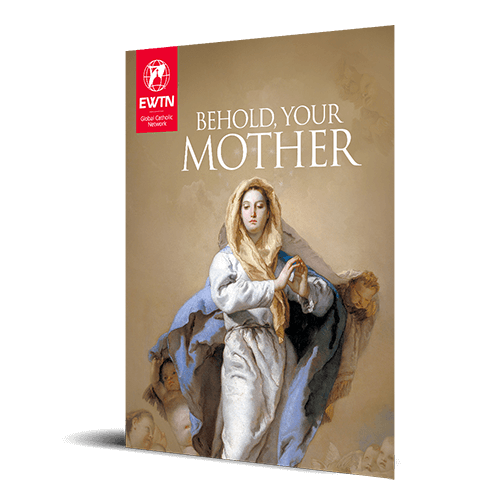
We hope this special eBook will draw you closer to our Blessed Mother and her Son, Jesus Christ. We trust that the following pages will bring your heart under her mantle, as we share a few of the beautiful and befitting names bestowed upon the Blessed Virgin Mary.
As we deepen our relationship with the Eternal Word, Jesus Christ, we grow in grace and are transformed by His love and mercy.
STEP 1
We’re here to serve you. Let us help you complete your gift with confidence.

Send a message to Mission Advancement.

Guidance for DAFs, stock, IRA, and more.

Manage your gifts and preferences.