

Your Faith Journey with EWTN
As we deepen our relationship with the Eternal Word, Jesus Christ, we grow in grace and are transformed by His love and mercy.
October 2, 1538–November 3, 1584
Patron Saint of stomach disorders, seminarians, spiritual directors/leaders, Bishops, catechists

“I have been shot. Keep praying.”
These were the words St. Charles Borromeo said after being shot in the back and wounded by a would-be assassin while leading evening prayer one night. The assassin was one of many people opposed to Borromeo’s efforts to reform the Church.
Born in 1538 in the castle of Arona, Italy, St. Charles Borromeo grew up in a wealthy family of nobility. He was devoted to the Church, and even as a boy, he showed remarkable seriousness about his faith. At age 12, he was given revenues from a wealthy abbey, and he insisted that the money be used only for the poor. This set a precedent for his lifelong dedication to charity.
Despite a slight speech impediment that led some to believe he was slow. St. Charles was a dedicated and accomplished student who pursued both civil and canon law at the University of Pavia. His education prepared him for future leadership in the Church. His uncle, Pope Pius IV, soon called him to Rome. He was made a cardinal at just 22 and was appointed Secretary of State. St. Charles quickly became a central figure in the Council of Trent, guiding its final sessions and ensuring that its decrees were faithfully implemented.
As Archbishop of Milan, St. Charles threw himself into the work of reforming the Church during the Counter-Reformation movement. He established seminaries to train priests, enforced catechesis for the laity, and founded the Confraternity of Christian Doctrine to teach the faith to children. St. Charles also created the Society of St. Ambrose, a group of secular priests committed to holy living and pastoral service.
St. Charles’ love for his flock was most visible during times of crisis. When famine and plague struck Milan and civic leaders abandoned the city, St. Charles stayed. He organized relief efforts, personally fed the hungry, sold his possessions to provide aid, and walked the streets ministering to the sick and dying. He convinced the city leaders to return and help him rebuild the city.
Pope St. John Paul II described St. Charles Borromeo as, “… a servant of souls, who never let himself be intimidated; a servant of the suffering, of the sick, of those condemned to death.” Canonized in 1610, St. Charles Borromeo is remembered as a tireless reformer, a fearless shepherd in crisis, and a saint who showed both clergy and laity what it means to live the Gospel.
St. Charles Borromeo was an important figure in bringing the Council of Trent to completion. As a young cardinal and Secretary of State under his uncle, Pope Pius IV, he worked tirelessly to guide the Council’s final sessions. But his influence did not end there. After the Council of Trent concluded, St. Charles devoted himself to implementing its decrees. He reformed the clergy through improved seminary training, standardized catechesis for children and adults, and renewed discipline among priests and bishops. These reforms became cornerstones of Catholic life for centuries, strengthening the Church’s ability to teach, preach, and shepherd souls.
In an age when many Catholics had little knowledge of the faith, St. Charles Borromeo founded the Confraternity of Christian Doctrine (CCD). Its purpose was simple but revolutionary: to provide systematic catechesis for children and adults. Volunteers were trained to teach basic prayers, Scripture, and Church teachings in parishes and homes. This reform empowered laypeople to teach religious education to their families, in their parishes, and to pass the Faith on to future generations. Today’s parish religious education programs can trace their roots back to St. Charles’ vision.
St. Charles Borromeo was a virtuous leader, showing prudence, fortitude, and charity. He led the Counter-Reformation efforts in Milan, Italy, one of the largest archdioceses of his time. He had a vision to restore dignity to divine service. He was committed to spiritual and practical reforms, such as the education of the clergy and faith formation for the laity. He showed strength when facing corruption and opposition, even surviving an assassination attempt.
When famine and plague devastated Milan in the 1570s, many civic leaders abandoned the city out of fear. St. Charles Borromeo stayed with his flock. He organized relief efforts and provided food for the people with his personal resources. During the plague, he walked the streets barefoot in sackcloth, carrying the Blessed Sacrament to comfort the sick and dying. His selfless service endeared him to his people.
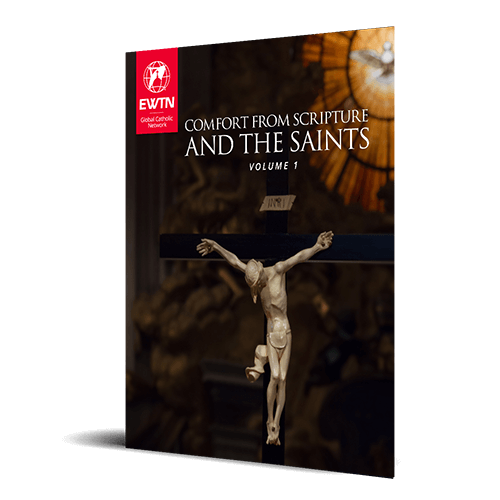
This eBook combines stunning photography from EWTN’s Vatican Bureau along with Bible passages and saints’ quotes that will calm your heart, give you hope, and remind you that God is with us always. Simply fill out the form below and we will send this to you!
Be inspired to follow in the footsteps of the saints. Subscribe to receive the Daily Saint, featuring a brief biography delivered to your inbox each day.
Start now and let the intercession and witness of the saints draw you closer to God.

As we deepen our relationship with the Eternal Word, Jesus Christ, we grow in grace and are transformed by His love and mercy.
STEP 1
We’re here to serve you. Let us help you complete your gift with confidence.

Send a message to Mission Advancement.

Guidance for DAFs, stock, IRA, and more.

Manage your gifts and preferences.