

Your Faith Journey with EWTN
As we deepen our relationship with the Eternal Word, Jesus Christ, we grow in grace and are transformed by His love and mercy.
316 or 336–November 8, 397
Patron Saint of reformed alcoholics, the poor and homeless, geese, horses, hotel/inn keepers, soldiers, wine growers/makers, and France

“I am a soldier of Christ. It is not lawful for me to fight.”
St. Martin of Tours said these words at a point in his life when he chose to leave his military service and follow Christ.
St. Martin de Tours (316–397) is one of the most beloved saints of the early church, remembered as a soldier, monk, bishop, and champion of the poor. Born in Savaria in modern-day Hungary to pagan parents, St. Martin’s family lived in northern Italy, where his father served as a Roman military officer.
St. Martin felt drawn to Christ from a young age. At the age of 10, he attended a Christian church against his parents’ wishes and became a catechumen in preparation for becoming a Christian. At fifteen, like his father, he was enlisted into the Roman army.
While serving the military in Gaul, St. Martin experienced the moment that defined his conversion. Encountering a beggar shivering in the cold, St. Martin cut his soldier’s cloak in half and gave it to the man. That night, St. Martin dreamed of Christ wearing the same cloak and heard Him say, “Martin, still a catechumen, has clothed Me with this garment.” Understanding that Christ was calling him to become a Christian, he was baptized at the age of 18.
St. Martin was charged as a coward and jailed when he told army officers that his Christian faith did not allow him to fight. He offered to go into battle without a weapon, but the battle did not take place because the enemy withdrew, so he was released from duty.
After leaving the army, St. Martin dedicated himself to Christ, studying under St. Hilary of Poitiers. He founded one of the first monasteries in Gaul, which became a center of missionary activity. In 371. Despite his reluctance, he was chosen bishop of Tours.
According to tradition, he tried to hide to avoid the election, but the cackling of geese gave away his hiding place, so he accepted the bishopric.
As bishop, St. Martin traveled the countryside on foot or on a donkey, preaching the Gospel and combating pagan practices. He founded parishes and monastic communities across Gaul, earning the love of his people. Many miracles were attributed to him, such as healings, exorcisms, and raising the dead.
St. Martin died in 397 at Candes and was buried in Tours. His shrine quickly became one of the most popular pilgrimage sites in medieval Europe. In some areas, his feast day, November 11, became so widely celebrated that it marked the beginning of Advent preparations, known as St. Martin’s Lent.
St. Martin was one of the earliest saints venerated by the Church who did not die a martyr. The Church canonized him by the popular acclaim of the people.
St. Martin of Tours was a known evangelist who tirelessly spread Christianity throughout the countryside of Gaul by preaching, performing miracles, and converting pagans to Christianity. He traveled constantly, sharing the Gospel and performing miracles, such as casting out demons and curing the sick, to convert people in the countryside. He converted his mother and other people from his hometown, but his father did not convert. He visited parishes on foot or by donkey and preferred being among the people he served. His leadership was grounded in humility, accessibility, and a deep connection with the people.
The half-cloak became a treasured relic known as the cappa. It was preserved in a shrine by the Frankish kings at the Marmoutier Abbey near Tours and was carried into battle. The small oratory built to house it was called a cappella—the origin of our word “chapel.” St. Martin’s act of caring for a beggar embodies the Christian call to love one’s neighbor.
Yes, early accounts credit him with several miracles, including bringing a catechumen back to life through prayer. Stories of his healing abilities included accounts of St. Martin curing a woman of palsy and a person with leprosy. He cast out demons and raised a child and a slave back to life. He healed a boy in a pagan village, leading to the conversion of the entire community.
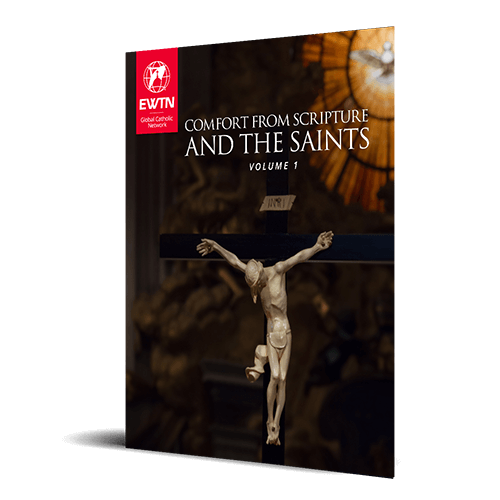
This eBook combines stunning photography from EWTN’s Vatican Bureau along with Bible passages and saints’ quotes that will calm your heart, give you hope, and remind you that God is with us always. Simply fill out the form below and we will send this to you!
Be inspired to follow in the footsteps of the saints. Subscribe to receive the Daily Saint, featuring a brief biography delivered to your inbox each day.
Start now and let the intercession and witness of the saints draw you closer to God.

As we deepen our relationship with the Eternal Word, Jesus Christ, we grow in grace and are transformed by His love and mercy.
STEP 1
We’re here to serve you. Let us help you complete your gift with confidence.

Send a message to Mission Advancement.

Guidance for DAFs, stock, IRA, and more.

Manage your gifts and preferences.