

Your Faith Journey with EWTN
As we deepen our relationship with the Eternal Word, Jesus Christ, we grow in grace and are transformed by His love and mercy.
July 7, 1207–November 17, 1231
Patron Saint of hospitals, Catholic Charities, nurses, falsely accused people, bakers, brides, dying children, exiles, people in poverty, homeless people, widows

“He is dead. He is dead. The world with all its joys is now dead to me.”
These were the words of St. Elizabeth of Hungary when she learned of the death of her husband, King Louis IV of Thuringia. Married at the age of 14, St. Elizabeth found happiness in her marriage, as well as support for her faith and devotion to God.
As a young woman of royal birth, St. Elizabeth of Hungary (1207–1231) exemplified humility and a love for the poor in imitation of Christ. While her marriage to Louis IV was defined by deep mutual love and shared devotion to God, her childhood was marked by loneliness and grief.
St. Elizabeth’s father, King Andrew II of Hungary, betrothed the four-year-old Elizabeth to Louis IV of Thuringia, who was 11 years old at the time. St. Elizabeth’s parents sent her away to be educated and prepared for her future royal life. Two years later, political enemies murdered St. Elizabeth’s mother, leaving the young girl to find comfort in a life of prayer and devotion to God.
After her marriage, Franciscan friars introduced St. Elizabeth to St. Francis of Assisi‘s spirituality. She was profoundly influenced by it, devoting her time to prayer and charitable works. Supported by her husband, she established hospitals, fed the hungry, and personally cared for the sick, including those suffering from contagious diseases.
St. Elizabeth’s life was not without hardship. When her husband died during the Crusades, she was left a widow at only 20 years old. Despite pressure to remarry, she pledged celibacy, dedicating herself entirely to God. Under the harsh direction of her spiritual advisor, she endured mistreatment, yet she remained steadfast in her commitment to serve Christ through the poor.
St. Elizabeth founded a hospital in Marburg, where she personally tended to the sick and destitute. She established a Franciscan monastery in Eisenach and joined the Franciscan Third Order, embodying its spirit of poverty and charity as a lay person.
Recognizing her life of holiness, Pope Gregory IX canonized St. Elizabeth of Hungary in 1235, just four years after her death. Today, she is honored as the patron saint of the Third Order of St. Francis, as well as of Catholic Charities, hospitals, widows, and people living in poverty.
St. Elizabeth’s service to the poor mirrors the ideals of St. Francis. She and King Louis were committed to serving those in need. They gave alms to the poor, built hospitals for the sick, and fed more than 1,000 people daily. During times of famine, St. Elizabeth sold her jewels and royal garments to buy grain and other food for the hungry.
After King Louis’ death, St. Elizabeth’s in-laws tried to prevent her from using her inheritance for charitable activities. Once she regained her inheritance, she used it to give alms to the needy and provide ongoing aid directly to the poor, the sick, and disabled people.
St. Elizabeth founded hospitals in Marburg and Wartburg, financing the cost with her personal wealth. She personally cared for the sick alongside the workers.
During a famine, when hospitals were overwhelmed, St. Elizabeth extended care to the poor by gathering many of the frail people in a castle she had converted into a hospital, where she provided them with care.
Soon after getting married, St. Elizabeth was introduced to Franciscan spirituality, and it influenced her profoundly. After her husband, Louis, died, she joined the recently formed Third Order of St. Francis.
As a member of the Franciscan Third Order, St. Elizabeth renounced her possessions and dedicated the last years of her life to serving the poor. She is honored as a patron saint of the Franciscan Third Order, representing its ideals. Her life of service reflected the Franciscan spirit of poverty, humility, and compassionate care for others.
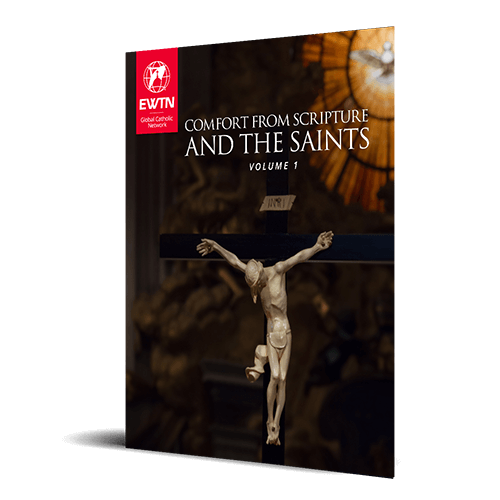
This eBook combines stunning photography from EWTN’s Vatican Bureau along with Bible passages and saints’ quotes that will calm your heart, give you hope, and remind you that God is with us always. Simply fill out the form below and we will send this to you!
From St. Elizabeth of Hungary’s example, Alex and Sergio learn that Jesus is our “compass in life” and that we should always trust in Him.
Be inspired to follow in the footsteps of the saints. Subscribe to receive the Daily Saint, featuring a brief biography delivered to your inbox each day.
Start now and let the intercession and witness of the saints draw you closer to God.

As we deepen our relationship with the Eternal Word, Jesus Christ, we grow in grace and are transformed by His love and mercy.
STEP 1
We’re here to serve you. Let us help you complete your gift with confidence.

Send a message to Mission Advancement.

Guidance for DAFs, stock, IRA, and more.

Manage your gifts and preferences.