

Your Faith Journey with EWTN
As we deepen our relationship with the Eternal Word, Jesus Christ, we grow in grace and are transformed by His love and mercy.
March 15, 270 – December 6, 343
Patron Saint of sailors, merchants, archers, repentant thieves, children, brewers, pawnbrokers, toymakers, unmarried people, and students in various cities and countries around Europe

Known as Nicholas the Wonderworker, numerous miracles were attributed to St. Nicholas of Bari, also known as St. Nicholas of Myra. His legendary habit of secret gift-giving became folklore, which over time created the legend of Santa Claus.
St. Nicholas, Bishop of Bari, was born in the third century to a wealthy Christian family in Patara, Lycia, located in modern Türkiye. From an early age, he was known for his love of the poor. He used his inheritance to assist the needy, the sick, and those who were victims of injustice.
He is best known for preventing three young virgins from living a life of sin on the streets. According to the story, St. Nicholas dropped a sack of gold coins three nights in a row into the window of a house belonging to a poor father who couldn’t pay the dowry for his three daughters’ marriages. Many miracles attributed to St. Nicholas were reported, including calming a storm and resurrecting the dead.
St. Nicholas was elected Bishop of Myra, and during the persecutions under Emperor Diocletian, he was imprisoned. He was released from prison when Emperor Constantine made Christianity legal. Although no record is available, it is believed that St. Nicholas was present at the Council of Nicaea in 325, defending the orthodoxy of the faith.
St. Nicholas died at age 73 and was buried in his Cathedral in Myra. Centuries later, his relics were moved to Bari, Italy, in the Basilica di San Nicola. The site is a significant pilgrimage destination where both Eastern and Western Christians venerate the saint’s relics.
According to tradition, some oil-like fluid exudes from the tomb in the crypt under the Basilica di San Nicola in Bari. Pilgrims have long treated this substance as holy and curative, having it bottled or used in devotional practice. It is part of what makes the relics in Bari a site of pilgrimage and healing.
Traditional accounts say St. Nicholas attended Nicaea in 325 as bishop of Myra. However, many scholars note his name is absent from several early lists of the council’s attendees, casting doubt on whether he was present. The stories grew as his veneration increased. Regardless, his later reputation strongly aligned with the defense of orthodox faith.
After Myra and its region fell under pressure (including from changing political control), in 1087, some of its relics were taken to Bari, Italy. The basilica built there grew into a central shrine. Christians of the West began calling him Nicholas of Bari because of the importance of that shrine. His identity remains tied to Myra historically, but Bari has been central to his cult in later centuries.
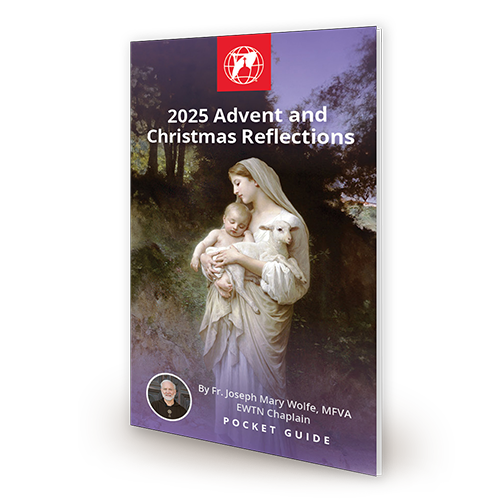
Sign up below for the free 2025 Advent and Christmas Reflections pocket guide, featuring meditations by Fr. Joseph Mary Wolfe, the EWTN Chaplain. His video series will also be sent to your email each Sunday of Advent and throughout the Christmas season. When you request the pocket guide by mail, we’ll also email you the eBook version. Or you may choose to receive just the eBook version and video series.
Send me the Physical Pocket Guide
Only available to homes in the U.S.A., while supplies last.
Send me the eBook



Be inspired to follow in the footsteps of the saints. Subscribe to receive the Daily Saint, featuring a brief biography delivered to your inbox each day.
Start now and let the intercession and witness of the saints draw you closer to God.

As we deepen our relationship with the Eternal Word, Jesus Christ, we grow in grace and are transformed by His love and mercy.
STEP 1
We’re here to serve you. Let us help you complete your gift with confidence.

Send a message to Mission Advancement.

Guidance for DAFs, stock, IRA, and more.

Manage your gifts and preferences.