

Your Faith Journey with EWTN
As we deepen our relationship with the Eternal Word, Jesus Christ, we grow in grace and are transformed by His love and mercy.
1474–1548
Patron Saint of indigenous peoples

St. Juan Diego Cuauhtlatoatzin (1474-1548) was a humble Indigenous man whose encounter with the Blessed Virgin Mary in the 16th century at Tepeyac Hill, a region that is now central Mexico, transformed not only his own life, but the faith of millions.
Born into the Chichimec people, he was given the name Cuauhtlatoatzin, which means “the Talking Eagle.” When Franciscan missionaries brought the Christian faith to the region, St. Juan Diego received the Gospel, and he was baptized around the age of fifty, along with his wife.
One morning, on December 9, 1531, St. Juan Diego was walking to Mass when the Blessed Virgin Mary appeared to him on Tepeyac Hill. Speaking in his native Nahuatl, she asked him to request that the bishop build a shrine in her honor on that spot, so that she “might pour out her grace” on all who call upon her.
Bishop Juan de Zumárraga was skeptical of the vision until he received a sign. On December 12, the Virgin Mary instructed St. Juan Diego to gather flowers from Tepeyac. The flowers were a miracle themselves, blooming in the winter and being foreign to the region. St. Juan Diego obeyed and wrapped the flowers in his tilma. Upon opening his tilma before the bishop, the roses fell, revealing an image of the Blessed Virgin Mary. This apparition is known as Our Lady of Guadalupe.
After this miracle, a chapel was built at Tepeyac, and St. Juan Diego spent the rest of his life in a hermitage nearby, caring for pilgrims, praying, and serving quietly in devotion. He died in 1548 and was buried at the chapel built for Our Lady of Guadalupe.
St. Juan Diego’s tilma, made from cactus fibers, was expected to disintegrate within 20 years; however, it remains intact after five hundred years. St. Juan Diego’s tilma, featuring the image of Our Lady of Guadalupe, is housed at the Basilica of Our Lady of Guadalupe in Mexico City.
In 1990, Pope John Paul II beatified St. Juan Diego, and in 2002, he was canonized, making him the first Indigenous saint of the Americas.
Tepeyac Hill was a site used by the pagan Aztec tribes to worship a pagan goddess. By Mary’s appearing there and requesting a Christian shrine, many theologians understand the Virgin Mary to be affirming God’s presence among the people and calling them toward a fuller revelation in Christ.
The tilma is preserved in the Basilica in Mexico City and is still intact after five hundred years. Despite tests and exposure, the image has not deteriorated as expected; it shows no visible brushstrokes or conventional pigments, and it has been subjected to conditions such as humidity and smoke, which would ordinarily damage such fabric.
St. Juan Diego’s conversion to Christianity as a member of the Chichimec people and Our Lady’s apparitions converted many pagans to Christianity. He was a faithful witness to the Christian faith. He is honored as the patron saint of Indigenous peoples of the Americas. Historically, the Church has approached Indigenous cultures by introducing the Faith through cultural adaptations in the light of the Gospel.
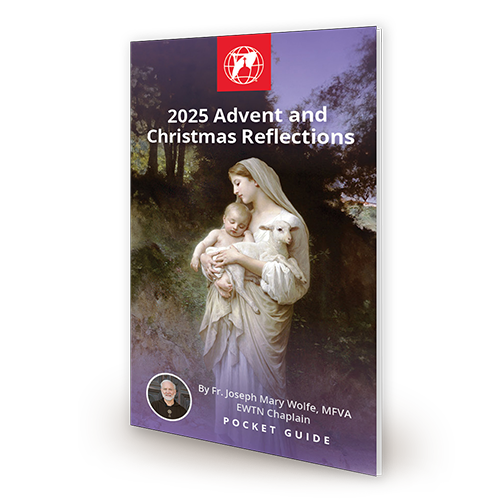
Sign up below for the free 2025 Advent and Christmas Reflections pocket guide, featuring meditations by Fr. Joseph Mary Wolfe, the EWTN Chaplain. His video series will also be sent to your email each Sunday of Advent and throughout the Christmas season. When you request the pocket guide by mail, we’ll also email you the eBook version. Or you may choose to receive just the eBook version and video series.
Send me the Physical Pocket Guide
Only available to homes in the U.S.A., while supplies last.
Send me the eBook
Fr. Joseph Mary, MFVA, and Fr. Leonard Mary, MFVA, recount St. Juan Diego’s legendary encounter with the Virgin of Guadalupe while exploring the Basilica of Our Lady of Guadalupe.
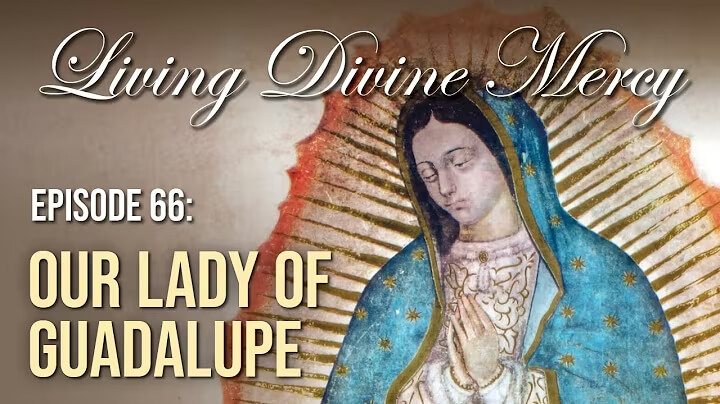


Join Fr. Chris Alar, MIC, as he explores the events surrounding the apparition of Our Lady on the hill in Tepeyac near Mexico City and explains the miracles associated with the tilma … why it cannot be explained.
Be inspired to follow in the footsteps of the saints. Subscribe to receive the Daily Saint, featuring a brief biography delivered to your inbox each day.
Start now and let the intercession and witness of the saints draw you closer to God.

As we deepen our relationship with the Eternal Word, Jesus Christ, we grow in grace and are transformed by His love and mercy.
STEP 1
We’re here to serve you. Let us help you complete your gift with confidence.

Send a message to Mission Advancement.

Guidance for DAFs, stock, IRA, and more.

Manage your gifts and preferences.