

Your Faith Journey with EWTN
As we deepen our relationship with the Eternal Word, Jesus Christ, we grow in grace and are transformed by His love and mercy.
Fourth century–December 19, 401

“If Origen has put forth any other writings, you are to know that they and their author are alike condemned by me.”
These words convey the zeal and conviction against heresy that Pope St. Anastasius I expressed in a letter to St. Simplicianus, who was the Bishop of Milan, mentor to St. Ambrose, and an influential figure in the conversion of St. Augustine of Hippo.
Pope St. Anastasius I served as Bishop of Rome from 399 until he died in 401. A Roman by birth, he lived in an era when the Church faced both internal theological debates and external pressures resulting from a weakened Western Roman Empire.
After his election, Pope St. Anastasius I quickly confronted doctrinal controversies, particularly the growing influence of Origen’s writings, which had been translated into Latin. These writings had spread false doctrines about central tenets of the Faith. Responding to concerns raised by Jerome and others, he assembled a council in 400 and condemned the heterodox aspects of Origen’s works. Once the pope spoke, the imperial government banned the works of Origen, stopping the spread of false doctrine.
Enthusiastic about orthodoxy, Pope St. Anastasius I also lent his support to the North African Church in its struggle against Donatism. The Donatists in North Africa claimed to have a “pure church” and elected their own bishop, claiming that Sacraments conferred by unworthy clergy were invalid. Pope St. Anastasius encouraged bishops to resist the view that the validity of Sacraments depended on the moral state of the minister, thus upholding the integrity of sacramental administration.
Among his practical reforms, Pope St. Anastasius safeguarded Church governance and order by requiring that priests from places outside Rome produce a letter of recommendation signed by five bishops before being admitted. He also introduced liturgical reverence, instructing priests to stand and bow their heads when reading from the Gospels.
St. Jerome praised Pope St. Anastasius I as “rich in poverty” and extolled his holiness and humility. He died in 401 and was buried in the Catacombs of Pontian. Although his pontificate lasted only two years, his defense of orthodoxy and pastoral sensitivity strengthened the Church.
As Origen’s writings were being translated into Latin, several Christian leaders, including St. Jerome, raised concerns about speculative theology in Origen’s writings. Pope St. Anastasius I responded by convening a council in 400 that condemned portions deemed heretical, especially those speculating on universal salvation, pre-existing souls, and speculation that the Son and Spirit were subordinate to the Father.
Pope St. Anastasius I issued a decree that any priest desiring to serve in the Roman Church, but coming from outside, must bring a recommendation signed by five bishops before being accepted. This rule discouraged unapproved transfers, preserved ecclesial order, and protected Rome from an unchecked influx of clergy.
St. Jerome used the phrase “rich in poverty” to praise Pope St. Anastasius I’s piety and detachment from the things the world has to offer. The phrase infers the pope’s acceptance of living in material scarcity and willingness to focus on serving the people of God. According to St. Jerome, Pope St. Anastasius I’s true riches lay in holiness, fidelity, and service, rather than in possessions.
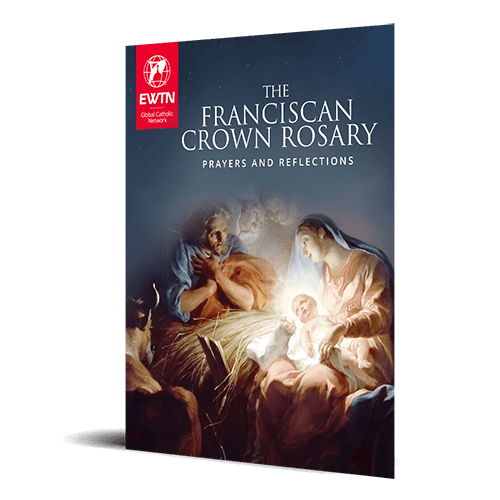
One unique devotion of the Franciscans is a seven-decade rosary known as the Franciscan Crown. While the traditional rosary consists of 5 decades which meditate on 15 mysteries, the 7-decade Franciscan Rosary, known as the Franciscan Crown, is a Rosary consisting of seven decades with each decade describing a particular joy from the life of the Blessed Virgin Mary. We hope that this special resource will help you meditate on each of the Seven Joys of Our Blessed Mother Mary.
Be inspired to follow in the footsteps of the saints. Subscribe to receive the Daily Saint, featuring a brief biography delivered to your inbox each day.
Start now and let the intercession and witness of the saints draw you closer to God.

As we deepen our relationship with the Eternal Word, Jesus Christ, we grow in grace and are transformed by His love and mercy.
STEP 1
We’re here to serve you. Let us help you complete your gift with confidence.

Send a message to Mission Advancement.

Guidance for DAFs, stock, IRA, and more.

Manage your gifts and preferences.