

Your Faith Journey with EWTN
As we deepen our relationship with the Eternal Word, Jesus Christ, we grow in grace and are transformed by His love and mercy.
281 A.D.–December 25, 304
Patron Saint of pharmacists, doctors, apothecaries, healers

St. Anastasia of Sirmium, also known by the titles “Anastasia the Pharmakolytria” (Deliverer from Potions) or “Anastasia the Healer,” is a martyr of the early Church who died around the year 304 during the persecution of Diocletian.
Although we know very little about her life, mainly from tradition, it still provides a context for the lives of Christians in the early Church. Tradition holds that St. Anastasia was born late in the third century, possibly in Rome, to a noble family. Her father was a pagan of rank, and her mother, Fausta, a Christian. She was secretly baptized and instructed in the Christian Faith by her mother. She was later mentored in the Faith by St. Chrysogonus.
After the death of her mother, St. Anastasia’s father arranged a marriage for her to a pagan named Publius. He died not long after, leaving her a widow. St. Anastasia then dedicated her life to helping persecuted Christians—visiting prisoners, giving them comfort, and healing their wounds.
According to tradition, Roman officials arrested and beheaded St. Chrysogonus. Soon after, St. Anastasia was also arrested. Some accounts say she was beheaded, others that she was burned alive.
St. Anastasia is among the few women saints named in the Roman canon. She is mentioned during the second Mass at Christmas. Her relics were said to have been transferred to Constantinople in the fifth century, and churches named in her honor are found in Rome, Zadar, and elsewhere.
St. Anastasia is named in the Roman canon (Eucharistic Prayer I) of the Mass to signify her prominent veneration as one of the few saints, alongside the Virgin Mary, commemorated by name in the canon. This insertion, dating back to the late fifth century, underscores her status as a highly venerated Roman Martyr and reflects her association with the Christmas Day Liturgy, which is her feast day. Being named in the Roman canon (also known as Eucharistic Prayer I) is a high honor reserved for only a few women saints.
Many details of her life come from later narratives that offer varying accounts. For example, it is unclear whether she was born in Rome or Sirmium, the exact manner of her death, her marriage to a pagan named Publius, and her relationship with St. Chrysogonus—all of which have variant or conflicting accounts. What is certain is that she was a martyr in Sirmium whose memory was honored by the early Christian community there.
St. Anastasia’s feast day coincides with Christmas on December 25, and her name appears in the Roman canon. The Eastern Orthodox and Byzantine Catholic Churches commemorate her feast day on December 22, under the title “Great Martyr Anastasia the Pharmakolytria.”
Her relics have been housed and venerated in several places, including Constantinople and Zadar. People seeking both physical and spiritual healing invoke her help, as well as those seeking protection against the effects of potions, poisons, and other harmful substances.
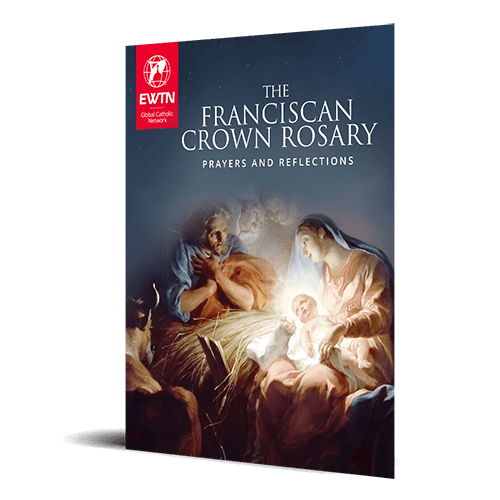
One unique devotion of the Franciscans is a seven-decade rosary known as the Franciscan Crown. While the traditional rosary consists of 5 decades which meditate on 15 mysteries, the 7-decade Franciscan Rosary, known as the Franciscan Crown, is a Rosary consisting of seven decades with each decade describing a particular joy from the life of the Blessed Virgin Mary. We hope that this special resource will help you meditate on each of the Seven Joys of Our Blessed Mother Mary.
Be inspired to follow in the footsteps of the saints. Subscribe to receive the Daily Saint, featuring a brief biography delivered to your inbox each day.
Start now and let the intercession and witness of the saints draw you closer to God.

As we deepen our relationship with the Eternal Word, Jesus Christ, we grow in grace and are transformed by His love and mercy.
STEP 1
We’re here to serve you. Let us help you complete your gift with confidence.

Send a message to Mission Advancement.

Guidance for DAFs, stock, IRA, and more.

Manage your gifts and preferences.