


Your Faith Journey with EWTN
As we deepen our relationship with the Eternal Word, Jesus Christ, we grow in grace and are transformed by His love and mercy.
c. 422–c. 512
Patron Saint of Paris, shepherds, winemakers, wax-chandlers, hatmakers, against eye complaints, fever, plagues, drought, war

St. Genevieve, a consecrated woman of profound faith and courage, is revered as the patroness of Paris. During a turbulent period in history, she rose as a leader and protector of the people of Paris.
In a little village four miles from Paris, St. Genevieve was born in the early fifth century. St. Germanus, Bishop of Auxerre, noticed St. Genevieve as a young girl while visiting her village. He foretold her future holiness and encouraged her consecration to God. At around the age of 15, she received the veil of consecration and embraced a life of virginity, prayer, fasting, and service to the poor.
St. Genevieve is best known for stopping the invasion of Paris by Attila the Hun in 451. As panic swept through Gaul, she rallied the people of Paris—instructing them not to flee and advising them to fast and pray for deliverance. St. Genevieve’s example and spiritual authority moved the city, and Attila’s forces unexpectedly altered their course, sparing Paris.
St. Genevieve’s influence and reputation quickly grew. She helped secure grain for the people of Paris during a famine, crossing enemy lines undetected. And she interceded successfully with rulers such as King Clovis I. She also supported the construction of churches, including one dedicated to St. Denis.
Her holiness and favor with the people created jealousy among some who accused St. Genevieve of being a fraud and a hypocrite. Two attempts to drown her were abandoned when St. Germanus, Bishop of Auxerre, providentially reached out to St. Genevieve at the ideal moment to disrupt the plans. Considering it divine intervention, the people abandoned their evil plot and eventually came to venerate her.
St. Genevieve died around 512 A.D. Her relics were venerated long after her death. Kings, scholars, and the faithful masses sought her intercession in Paris and beyond for centuries.
St. Genevieve was known to have direct contact with King Clovis I, the first Christian king of the Franks. She counseled and persuaded him, along with other leaders, to show mercy to prisoners and provide aid to the poor. Her influence reveals how her moral authority extended beyond prayer to advocacy in political decision-making.
St. Genevieve organized grain shipments via river transport when Paris faced food shortages during a famine. She traveled great distances, persuaded officials to release stores, and arranged for fair distribution to the poor. In addition to the food shortages, the city was under siege by enemy forces during a battle. According to tradition, eleven boats passed through enemy lines undetected at night to deliver the grain to the people.
Many healings were reported at the site of St. Genevieve’s tomb. In 1129, when a devastating pandemic struck Paris, a procession with her relics led to the swift end of the disease. All those who touched the relics were healed, and the plague miraculously stopped, increasing devotion to St. Genevieve. This event is still commemorated in Paris.
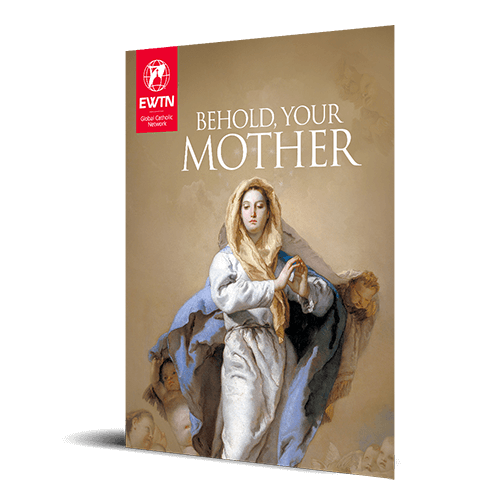
We hope this special eBook will draw you closer to our Blessed Mother and her Son, Jesus Christ. We trust that the pages will bring your heart under her mantle, as we share a few of the beautiful and befitting names bestowed upon the Blessed Virgin Mary.
Be inspired to follow in the footsteps of the saints. Subscribe to receive the Daily Saint, featuring a brief biography delivered to your inbox each day.
Start now and let the intercession and witness of the saints draw you closer to God.

As we deepen our relationship with the Eternal Word, Jesus Christ, we grow in grace and are transformed by His love and mercy.
STEP 1
We’re here to serve you. Let us help you complete your gift with confidence.

Send a message to Mission Advancement.

Guidance for DAFs, stock, IRA, and more.

Manage your gifts and preferences.