

Your Faith Journey with EWTN
As we deepen our relationship with the Eternal Word, Jesus Christ, we grow in grace and are transformed by His love and mercy.
April 16, 1819–January 12, 1892
Patron Saint of those living in poverty

St. Antonio Maria Pucci (1819–1892) dedicated his life to serving God and His people. With quiet strength and a servant’s heart, he attended to the temporal and spiritual needs of the most vulnerable—the poor, the sick, and the elderly.
Born Eustachio Pucci in Vernio, Tuscany, St. Antonio became an Italian Servite priest known for his deep compassion, dedicated pastoral care, and humble service to the poor, sick, and children.
He was the second of seven children in a devout but impoverished family.
St. Antonio’s father, a church sacristan, initially opposed his son’s desire to enter religious life. Times were difficult, and the large family needed an extra pair of helping hands. Yet, Eustachio persisted. With the mediation of their parish priest, the father agreed, and Eutachio joined the Servite Order at age 18, taking the name Antonio Maria.
St. Antonio was ordained in 1843 and assigned to the coastal town of Viareggio, where he served as parish priest for more than 40 years. Short in stature, the people affectionately called him Il Curatino (the little priest). He became a beloved figure in the community. He gave away his own clothes to the poor and walked the streets distributing food. On one such occasion, as he walked the streets, hostile, anticlerical citizens berated him. When he challenged them, they attacked him with clubs.
St. Antonio’s ministry extended beyond material aid. He established a school and the Holy Childhood Society for the education of children and various associations involving the laity in apostolic work, providing specific faith formation programs for youth, men, and women. He dedicated himself entirely to others, despite the social tensions of the time.
St. Antonio also founded a hostel for the sick, the poor, and the elderly and organized their care during epidemics. His devotion to the Blessed Virgin under the title of Our Lady of Sorrows and the Servite charism of compassion shaped his daily life. The people saw him as a living sign of God’s presence among the people.
On January 6, 1982, after celebrating Mass, St. Antonio went out in a storm to assist a sick parishioner. As a result, he contracted pneumonia that worsened and led to his death on January 12, 1892. He was canonized by Pope John XXIII in 1962. St. Antonio reminds us that heroic virtue can be found in daily acts of love and service.
St. Antonio was a professed member of the Order of the Servants of Mary, known as the Servite Order. The Servites follow the Rule of St. Augustine, which is based on the principles of unity, love, and service. The rule emphasizes humility and mutual respect, advising against pride. The order is distinguished by its charism of devotion to the Mother of God, particularly to her seven sorrows. As a Servite, St. Antonio was devoted to the Blessed Virgin Mary, Mother of Sorrows, and called to bring God’s love and healing to others, particularly the poor, the afflicted, and the marginalized.
St. Antonio Maria Pucci established several educational and catechetical resources for his parish. In 1853, Pucci founded a school in his parish to educate children and helped pioneer and promote the Holy Childhood Society, an educational organization for children. He founded and directed a new congregation of Servite sisters whose primary mission was the education of youth in the parish.
To involve his parishioners in Apostolic work and help them grow in Christian virtue, St. Antonio organized associations for various groups in the community:
St. Antonio had deep compassion for the most vulnerable. During the severe cholera epidemic of 1854, St. Antonio worked day and night, with little rest, to tend to the sick. He established the first permanent seaside hostel for ill and poor children in Viareggio. Often called “father of the poor,” he was known to give his own clothes to those in need, embracing a life of poverty. It’s believed St. Antonio contracted the pneumonia that killed him after giving his coat to a poor person on a cold, stormy night.
St. Antonio was a pioneer in organizing the laity for apostolic work. He supported the St. Vincent de Paul Society and established associations for men, women, and teenagers within his parish to help care for the vulnerable. Providing comfort and reconciliation for his parishioners, he regularly administered the sacrament of penance, consoled the afflicted, and worked to bring peace to families torn by hatred and violence.
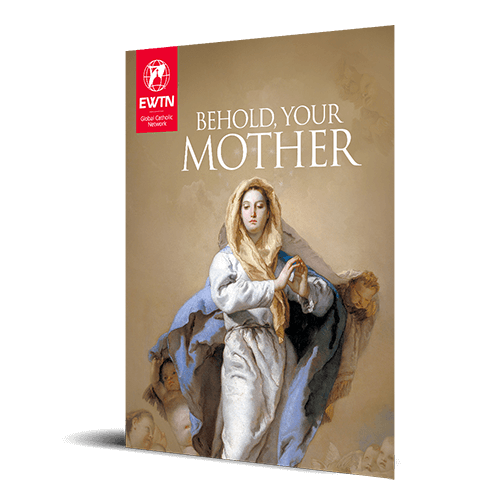
We hope this special eBook will draw you closer to our Blessed Mother and her Son, Jesus Christ. We trust that the pages will bring your heart under her mantle, as we share a few of the beautiful and befitting names bestowed upon the Blessed Virgin Mary.
Be inspired to follow in the footsteps of the saints. Subscribe to receive the Daily Saint, featuring a brief biography delivered to your inbox each day.
Start now and let the intercession and witness of the saints draw you closer to God.

As we deepen our relationship with the Eternal Word, Jesus Christ, we grow in grace and are transformed by His love and mercy.
STEP 1
We’re here to serve you. Let us help you complete your gift with confidence.

Send a message to Mission Advancement.

Guidance for DAFs, stock, IRA, and more.

Manage your gifts and preferences.