

Your Faith Journey with EWTN
As we deepen our relationship with the Eternal Word, Jesus Christ, we grow in grace and are transformed by His love and mercy.
January 12, 251–January 17, 356
Patron Saint of animals, infectious and skin diseases, farmers, butchers, the poor, basket makers, brush makers, grave diggers, the Pontifical Ecclesiastical Academy in Rome

St. Antony of Egypt, also known as St. Antony the Great or the Father of Monks, is one of the most revered figures in Christian monasticism. Born around 251 in Egypt, St. Antony was the son of wealthy Christian parents.
After his parents died, St. Antony was left to care for his young sister. One day at church, St. Antony was moved by the Gospel words: “If you would be perfect, go, sell what you possess and give to the poor” (Matthew 19:21).
St. Antony immediately took this command to heart. He gave away his properties, sold his goods, leaving enough to care for his sister, whom he left in the care of a religious community of consecrated virgins. He withdrew into the desert to live a life of prayer, fasting, and solitude.
St. Antony’s spiritual battle against temptation and his perseverance in asceticism drew many disciples, who sought his counsel and example. They began living around the abandoned Roman fort where St. Antony lived and pleaded with him to teach them his wisdom and pious ways, but he refused. His future disciples finally broke down his door. St. Antony did not get angry. He organized them into communities and taught them for six years before retreating again into the desert for solitude.
Although St. Antony was illiterate, learned men from as far as Greece came to learn from him. He encouraged monks to live with humility, obedience, and charity, and he urged them to pray constantly. His holiness had a profound influence on both the Church and the culture. St. Antony became known as the father of Christian monasticism. St. Athanasius later wrote The Life of Antony, which became a spiritual classic, inspiring generations of monks in both the East and West.
St. Antony lived to the remarkable age of 105, dying around the year 356 in the Egyptian desert, and was buried by his disciples. Many healing miracles were attributed to St. Antony during his life.
St. Antony is honored as the Father of Monks because he organized and guided groups of disciples who followed his example of prayer, fasting, and solitude, thereby forming the earliest model of monastic community life. St. Antony was one of the first to retreat into the wilderness to live a solitary life of prayer and asceticism, which inspired others to follow. Although he did not intend to have disciples, many men came seeking his wisdom. He organized the many disciples who gathered around him into communities, providing spiritual guidance and instruction, laying the foundation for Christian monasticism. While he did not create a formal structure, he guided and organized the ascetics who settled near him, giving them a blueprint for community life and the earliest form of Christian monasticism.
St. Antony was illiterate. Only a few letters, believed to have been dictated by St. Antony, have survived. The letters emphasize perseverance in faith, charity, and vigilance against temptation. What we know about St. Antony’s life and teachings comes from The Life of Antony, a book written by St. Athanasius, Bishop of Alexandria, in the fourth century. His book reports on the life of St. Antony the Great, the “father of Christian monasticism.” St. Athanasius describes St. Antony’s conversion and his life as a hermit in the Egyptian desert. The book helped spread the monastic ideal, especially in the West, and inspired readers to emulate St. Antony’s commitment to a life of spiritual devotion. The book promoted the monastic movement and the ascetic life in both the East and the West after it was translated into Latin.
St. Antony endured fierce spiritual and physical temptations—visions, fears, and distractions—which he overcame through prayer and trust in God. Living alone in the desert, St. Antony faced temptations of pride, boredom, lust, and greed, which often took the form of visions of celebrity, wealth, and worldly pleasures. St. Antony experienced physical demonic attacks, which he overcame through prayer, fasting, and meditating on Christ.
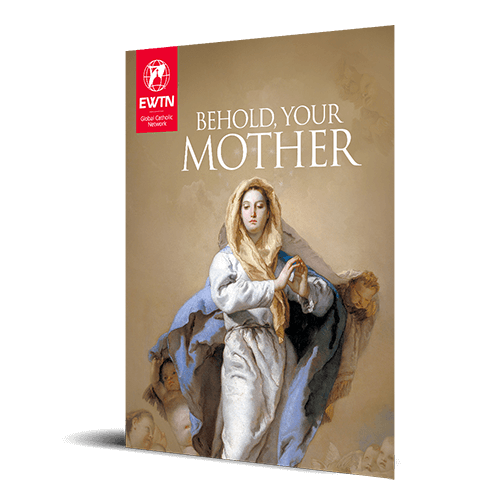
We hope this special eBook will draw you closer to our Blessed Mother and her Son, Jesus Christ. We trust that the pages will bring your heart under her mantle, as we share a few of the beautiful and befitting names bestowed upon the Blessed Virgin Mary.
Be inspired to follow in the footsteps of the saints. Subscribe to receive the Daily Saint, featuring a brief biography delivered to your inbox each day.
Start now and let the intercession and witness of the saints draw you closer to God.

As we deepen our relationship with the Eternal Word, Jesus Christ, we grow in grace and are transformed by His love and mercy.
STEP 1
We’re here to serve you. Let us help you complete your gift with confidence.

Send a message to Mission Advancement.

Guidance for DAFs, stock, IRA, and more.

Manage your gifts and preferences.