

Your Faith Journey with EWTN
As we deepen our relationship with the Eternal Word, Jesus Christ, we grow in grace and are transformed by His love and mercy.
Unknown–c. 380
Patron Saint of bishops, clergy, the Church in Bologna, those defending the Faith

St. Faustinian, Bishop of Bologna, served the Church as the second Bishop of Bologna, Italy. He was an early Church leader who served faithfully during the fourth century, a time of both expansion and internal conflict within Christianity. While few details of his personal life have survived, his legacy remains closely tied to his role as shepherd of the Christian community in Bologna, an important city in northern Italy.
As bishop, St. Faustinian carried the responsibility of teaching authentic Christian doctrine and guiding the faithful through an era marked by theological controversy. The Arian heresy, which denied the full divinity of Jesus Christ, threatened the unity of the Church during this period. Bishops like St. Faustinian played a vital role in defending the teachings affirmed at the Council of Nicaea and preserving the Truth handed down from the Apostles.
St. Faustinian strengthened the Christian community in Bologna. His leadership helped establish the Church on solid foundations during a critical era of its history. The Roman Martyrology mentions St. Faustinian, noting that his “preaching strengthened and multiplied the faithful of that Church which had been much afflicted during the persecutions of Diocletian.”
In addition to his doctrinal leadership, St. Faustinian provided pastoral care to a growing Christian population. He encouraged prayer, moral integrity, and fidelity to the Sacraments, helping believers live out their faith in daily life. His episcopal ministry contributed to strengthening the Church’s presence in Bologna and the surrounding regions.
St. Faustinian died around the year 380, after years of devoted service. Though history preserves only a brief record of his life, the Church honors him as a bishop who faithfully upheld truth, unity, and pastoral charity during a decisive period in Christian history.
The Arian controversy was a major theological dispute in the fourth century concerning the nature of Jesus Christ. Arians claimed that Christ was created and did not have a divine nature. This teaching challenged the core belief in Christ’s divinity and threatened Church unity. Bishops like St. Faustinian defended orthodox doctrine, helping to preserve the Faith expressed in the Nicene Creed. According to information cited by St. Athanasius, the Bishop of Alexandria, in his Apologia contra Arianos, St. Faustinian is included in a list of Italian bishops participating in the Council of Sardica, which dealt with the issue of Arianism in 343.
While St. Faustinian’s term of office coincides with a time of violent persecution of the Church in the fourth century, he may have been in office when conditions for Christians began to improve. Also, the intensity of persecution varied by region, and some records show it was less severe in the part of the Western Empire where Bologna is located. However, Christians still experienced persecution of some type across the Roman Empire during this time. According to tradition, St. Faustinian is said to have suffered during the Diocletian persecution but survived. According to the Roman Martyrology, his preaching strengthened the Church in Bologna, which had been “much afflicted during the persecutions of Diocletian.”
Little information about St. Faustinian’s term as Bishop of Bologna is definitively recorded. He is traditionally regarded as one of Bologna’s early bishops who helped establish the city’s Christian foundations. According to the earliest list of Bishops of the Archdiocese of Bologna before the 14th Century, he is listed second. This information is also supported by a Gothic inscription from before 1494, which reads that St. Zama was the first Bishop and St. Faustinian the second. His episcopacy contributed to the continuity of faith and leadership that allowed the Church in Bologna to flourish in later centuries.
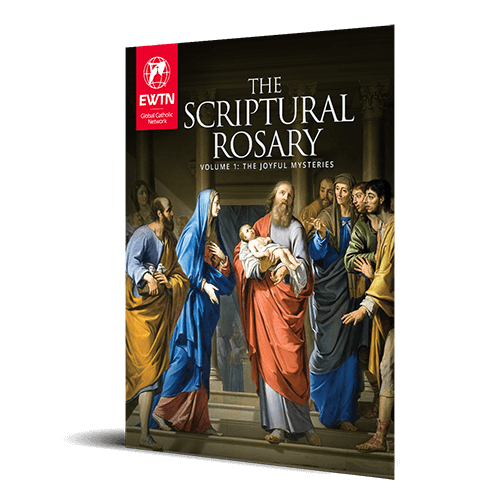
The Holy Rosary is an amazing prayer, encouraged by popes, loved by saints, and prayed by the faithful. At its heart, the Rosary is a meditation on Sacred Scripture, on the lives of Jesus and Mary.
Through this Scriptural Rosary, we hope that you will be able to better meditate on each Hail Mary and deepen your understanding of Sacred Scripture. Use the form below to get your free copy of The Scriptural Rosary.
Be inspired to follow in the footsteps of the saints. Subscribe to receive the Daily Saint, featuring a brief biography delivered to your inbox each day.
Start now and let the intercession and witness of the saints draw you closer to God.

As we deepen our relationship with the Eternal Word, Jesus Christ, we grow in grace and are transformed by His love and mercy.
STEP 1
We’re here to serve you. Let us help you complete your gift with confidence.

Send a message to Mission Advancement.

Guidance for DAFs, stock, IRA, and more.

Manage your gifts and preferences.