

Your Faith Journey with EWTN
As we deepen our relationship with the Eternal Word, Jesus Christ, we grow in grace and are transformed by His love and mercy.
January 13, 1381–March 6, 1447
Patron Saint of women who want to conceive, expectant mothers, sick children

St. Colette of Corbie, also known as St. Colette Boylet, was a woman of extraordinary faith whose life of prayer and reform helped to renew the Poor Clare Order during a time of spiritual decline. Born in 1381 in Corbie, France, she was the long-awaited child of devout Christian parents, who were advanced in age. They had prayed earnestly for her birth for a long time. When she was born, they named her Nicolette after the saint. Later, her name was shortened to Colette.
From an early age, St. Colette showed a strong inclination toward prayer and devotion to God. After her parents died, she sought a contemplative, ascetic religious life. She initially joined the Beguines, a group of pious laywomen, but she desired a more profound spirituality. Later, she embraced religious life among the Poor Clares.
Sensing a strong call to reform the Poor Clare Order, St. Colette worked to restore the original spirit of St. Clare of Assisi—adopting a cloistered life of poverty, fasting, and prayer. She guided her sisters not only through discipline but by example, embodying Franciscan simplicity and trust in Divine Providence.
St. Colette undertook a rigorous reform of the Order. With papal approval, she traveled extensively throughout France and neighboring regions, founding new monasteries, and reforming existing ones. Despite resistance and hardship, St. Colette remained steadfast and grew in wisdom and spiritual fortitude. Numerous miracles were attributed to her intercession during her lifetime, including healings and the gift of prophecy.
St. Colette died on March 6, 1447, after decades of faithful service. Canonized in 1807, she is honored as an influential reformer and spiritual leader. She is the patron saint of women seeking to conceive, expectant mothers, and sick children.
St. Colette had a great desire to experience deep Franciscan spirituality. She wanted to bring the Poor Clare order back to the radical poverty, austerity, and spiritual fervor of St. Francis and St. Clare’s original vision. With papal authorization, she introduced reforms that included a cloistered community observing strict poverty, fasting, and communal prayer. She founded or reformed more than a dozen monasteries across Europe, establishing a lasting reform movement within the Franciscan family known as the Colettine Poor Clares.
Numerous miracles were attributed to St. Colette both during her lifetime and after her death. These included healings, prophetic insights, and the multiplication of food during times of scarcity. She is also traditionally invoked by expectant mothers due to accounts of her prayers that helped a mother during childbirth complications and revived a stillborn baby.
St. Colette faced significant difficulties in reforming the Poor Clare order. She was initially unsuccessful in her attempt to reform the monastery in her native town of Corbie, facing persistent resistance from the local monks and religious figures. As she traveled to different convents, she endured personal abuse and slander and was even accused of sorcery by those who resisted her reforms. She had to seek the pope’s permission during the Great Schism between the Eastern and Western Churches, when multiple men claimed the papacy. St. Colette had to navigate this complex political situation, and her association with an “antipope” complicated her cause and questioned her authority to implement reform. Despite such challenges, St. Colette persevered. Her reforms took root and flourished throughout Europe.
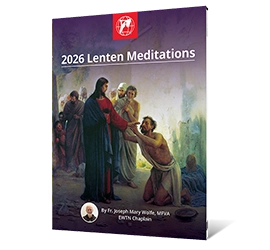
Prepare your soul for the glorious Resurrection with free weekly prayers and reflections from EWTN Chaplain Fr. Joseph Mary Wolfe, MFVA—exploring the healing power of Christ’s love. You’ll also receive weekly emails from Fr. Joseph beginning on Ash Wednesday, continuing each Sunday of Lent and Easter Sunday.
Draw closer to Our Lord as you pause, meditate, and return to Him with your whole heart.
Send me the Physical Pocket Guide
Only available to homes in the U.S.A.
Send me the
eBook
Be inspired to follow in the footsteps of the saints. Subscribe to receive the Daily Saint, featuring a brief biography delivered to your inbox each day.
Start now and let the intercession and witness of the saints draw you closer to God.

As we deepen our relationship with the Eternal Word, Jesus Christ, we grow in grace and are transformed by His love and mercy.
STEP 1
We’re here to serve you. Let us help you complete your gift with confidence.

Send a message to Mission Advancement.

Guidance for DAFs, stock, IRA, and more.

Manage your gifts and preferences.