

Your Faith Journey with EWTN
As we deepen our relationship with the Eternal Word, Jesus Christ, we grow in grace and are transformed by His love and mercy.
Late second century–c. 203
Patron Saint of mothers, expectant mothers, martyrs, catechumens, ranches, butchers

Sts. Perpetua and Felicity are among the most beloved martyrs of the early Church, remembered for their fearless witness to Christ and their profound spiritual unity.
In 202 A.D., five catechumens preparing for Baptism were arrested at Carthage during a time of intense persecution under Emperor Septimius Severus. Learning of their arrest, their teacher in the Faith turned himself in to Roman authorities to face martyrdom with them.
Among those arrested were Sts. Perpetua and Felicity. St. Perpetua was a well-educated young noblewoman and the mother of an infant son. St. Felicity was her enslaved companion and pregnant at the time of their arrest. Despite their differences in status, the two women formed a deep bond rooted in their shared beliefs and hope in Christ.
While imprisoned, St. Perpetua recorded visions and reflections that provide rare insight into the spiritual life of early Christians. She endured repeated pleas from her father to renounce her Faith for the sake of her family and child, yet she refused to deny her Lord and sacrifice to the pagan gods. St. Felicity feared that her pregnancy would prevent her from dying with her companions, but she gave birth prematurely in prison after fervent prayer.
On March 7, 203, Roman soldiers took them into the arena and subjected them to brutal public execution. Their serenity and courage deeply impressed many who witnessed their martyrdom, including some soldiers. But other pagans seethed with anger and called for their torturous death.
Sts. Perpetua and Felicity stood side by side as wild beasts attacked them and as the soldiers’ swords delivered the final blow.
The Church has honored Sts. Perpetua and Felicity from ancient times, and their names are included in the Roman Canon of the Mass.
St. Perpetua’s martyrdom account is historically valuable because it is a rare, personal, first-hand narrative from an early Christian martyr. As a noblewoman martyred alongside slaves, her story demonstrates that Christianity united people across social divides, making all believers equal in faith and suffering. It offered invaluable insights into early Christian life, including faith, persecution, and spiritual experiences. St. Perpetua’s prison diary is one of the earliest-known Christian writings by a woman and gives insight into her role and voice in society. It sheds light on early Christian theology, baptismal preparation, and the lived faith of persecuted believers in the third century.
St. Perpetua was known for having prophetic gifts. In her diary, The Passion of Saints Perpetua and Felicity, she recorded several powerful, prophetic visions and dreams in prison that foretold her martyrdom and entry into Heaven. These visions offer profound spiritual guidance and demonstrate God’s Spirit at work in her suffering. In one vision, she saw a ladder rising to Heaven. At its foot was a dragon that prevented anyone from climbing the ladder. St. Perpetua climbed the ladder by treading on the dragon’s head, symbolizing victory over evil. In another vision, she met Christ as a shepherd, who gave her milk, signifying divine sustenance and acceptance into Paradise. St. Perpetua’s visions were considered authoritative and influenced some of St. Augustine’s writings and sermons.
In the story of Sts. Perpetua and Felicity, we learn about a Roman law prohibiting the execution of pregnant women based on the principle of preserving the unborn baby. For Romans, the concern regarding pregnant women was less about the mother’s rights and more about the unborn child. However, this protection of the unborn referred to the child’s legal status as a viable future Roman citizen, not necessarily the baby’s right to life. Rome sanctioned the death of unwanted or deformed newborn infants, and pagan families had the power of life and death over a newborn child. Laws were introduced to prevent infanticide in the fourth century when Emperor Constantine legalized Christianity.
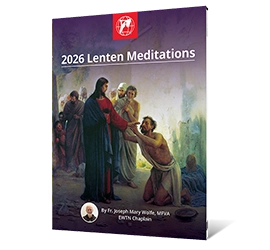
Prepare your soul for the glorious Resurrection with free weekly prayers and reflections from EWTN Chaplain Fr. Joseph Mary Wolfe, MFVA—exploring the healing power of Christ’s love. You’ll also receive weekly emails from Fr. Joseph beginning on Ash Wednesday, continuing each Sunday of Lent and Easter Sunday.
Draw closer to Our Lord as you pause, meditate, and return to Him with your whole heart.
Send me the Physical Pocket Guide
Only available to homes in the U.S.A.
Send me the
eBook
Find the true meaning of courage and human dignity in the stories of Sts. Perpetua and Felicity and the 40 Martyrs of Sebaste, who gave their lives for Christ.
Be inspired to follow in the footsteps of the saints. Subscribe to receive the Daily Saint, featuring a brief biography delivered to your inbox each day.
Start now and let the intercession and witness of the saints draw you closer to God.

As we deepen our relationship with the Eternal Word, Jesus Christ, we grow in grace and are transformed by His love and mercy.
STEP 1
We’re here to serve you. Let us help you complete your gift with confidence.

Send a message to Mission Advancement.

Guidance for DAFs, stock, IRA, and more.

Manage your gifts and preferences.