

Your Faith Journey with EWTN
As we deepen our relationship with the Eternal Word, Jesus Christ, we grow in grace and are transformed by His love and mercy.
669–February 11, 731
Patron Saint of England, musicians, singers, teachers, students

Pope St. Gregory II guided the Church during a turbulent era marked by political upheaval, missionary expansion, and fierce controversy over the veneration of sacred images.
Born in Rome in the late seventh century, Pope St. Gregory II was placed in the papal court as a young man and educated for service to the Church. He served as a subdeacon and then as a deacon under Pope Sergius I, gaining a reputation for prudence, learning, and administrative skill. He was appointed head of the Vatican Library and later became the papal secretary.
Elected pope in 715, Pope St. Gregory II became known for his pastoral zeal and strong leadership. One of his earliest concerns was the ongoing missionary work in Germanic lands. He supported and guided St. Boniface in his evangelization work among the German peoples and later consecrated him as bishop.
Pope St. Gregory II’s pontificate was also defined by his strong opposition to the iconoclastic policies of Emperor Leo III. Pope St. Gregory II defended the Church’s teaching on holy icons and their role in Christian devotion. His letters to the emperor presented a clear defense for honoring Christ and the saints through visible reminders of their holiness. His stance helped preserve orthodox teaching in the West during a period of instability.
At home in Rome, Pope St. Gregory II restored churches, reformed the Church’s liturgy and practices, and provided assistance to the poor, improving their quality of life. He also fortified Rome’s defenses and negotiated with the Lombards to protect the city from invasion.
Pope St. Gregory II died on February 11, 731. His 15-year pontificate made a lasting impact on the Church through his missionary efforts, support for Church unity, and the preservation of sacred tradition.
Pope St. Gregory II opposed the iconoclast controversy by rejecting Emperor Leo III’s edict against icons and defending the veneration of religious images. When Emperor Leo III issued a decree in 726 to destroy icons, Pope St. Gregory II immediately rejected it and publicly defended the use of religious imagery. Pope St. Gregory II wrote a lengthy defense of icons in a letter to the emperor, distinguishing them from idols and explaining the legitimate reverence and veneration accorded to them by Christians. The pope’s rejection of the emperor’s imposition of iconoclasm sparked a revolt that deepened the rift between the papacy and the Byzantine Empire. The situation prompted the Church in Rome to seek an alliance with the Franks in the West.
Pope St. Gregory II’s most significant accomplishments include opposing iconoclasm and defending the use of icons in the West. Firmly opposing the heresy of iconoclasm, Pope St. Gregory II argued against the destruction of religious images and ensured the Western tradition of using icons and statues would continue. Another of his accomplishments was sending St. Boniface to evangelize the region that is now Germany, expanding the reach of Christianity. He also saved the city of Ravenna from the Lombard army in 727 by leveraging his influence to organize local support in Italy and using diplomacy to pressure the Lombard king into returning the city to Byzantine control. As the head of the Church, Pope St. Gregory II strengthened the authority of the papacy and expanded its influence in Western Europe. He worked to reform the Church’s liturgy and practices. He also expanded charitable efforts, providing food, clothing, and financial support for the poor during times of crisis. He organized large-scale relief efforts to combat famine, help refugees, and care for the sick and imprisoned.
Pope St. Gregory II was fond of holy monks and worked to build and restore monasteries. He turned his family’s mansion into a monastery, St. Agatha in Suburra. He also took on the task of rebuilding the Monte Cassino monastery, a mother abbey of the Benedictines that was destroyed by the Lombards around 580. Pope St. Gregory II showed great concern for the proper governance of monasteries. During a dispute over the deposition of the abbot of the Monastery of St. Vincent on the Volturno, he showed his concern, intervening to strengthen and uphold its legitimate authority.
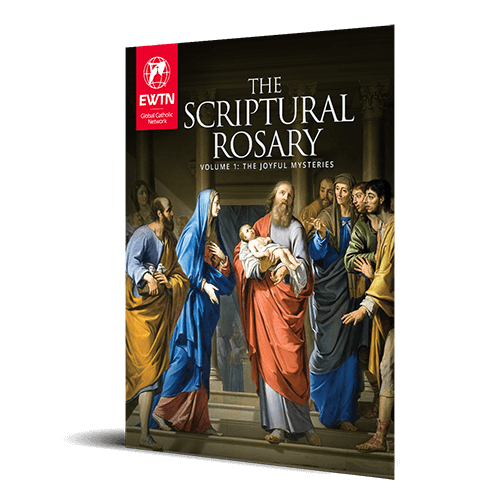
The Holy Rosary is an amazing prayer, encouraged by popes, loved by saints, and prayed by the faithful. At its heart, the Rosary is a meditation on Sacred Scripture, on the lives of Jesus and Mary.
Through this Scriptural Rosary, we hope that you will be able to better meditate on each Hail Mary and deepen your understanding of Sacred Scripture. Use the form below to get your free copy of The Scriptural Rosary.
Be inspired to follow in the footsteps of the saints. Subscribe to receive the Daily Saint, featuring a brief biography delivered to your inbox each day.
Start now and let the intercession and witness of the saints draw you closer to God.

As we deepen our relationship with the Eternal Word, Jesus Christ, we grow in grace and are transformed by His love and mercy.
STEP 1
We’re here to serve you. Let us help you complete your gift with confidence.

Send a message to Mission Advancement.

Guidance for DAFs, stock, IRA, and more.

Manage your gifts and preferences.