

Your Faith Journey with EWTN
As we deepen our relationship with the Eternal Word, Jesus Christ, we grow in grace and are transformed by His love and mercy.
September 21, 600–January 27, 672
Patron Saint of Catanzaro, Italy

During his fifteen-year reign, Pope St. Vitalian faced many controversies and challenges, and he worked to preserve unity as much as possible without compromising faith.
Pope St. Vitalian guided the Church during a time of political tension and theological division. His pontificate is remembered for fostering unity between the Eastern and Western Churches and for maintaining stability amid the turmoil in the seventh century.
Born in Segni, Italy, Pope St. Vitalian was elected pope following the death of Pope Eugene I. His papacy coincided with strained relations between Rome and Constantinople over the Monothelite controversy—a disagreement on whether Christ had one or two wills. Pope
Pope St. Vitalian sought reconciliation rather than confrontation. He maintained communication with Emperor Constans II and Patriarch Peter of Constantinople. In a meaningful gesture of peace, Patriarch Peter acknowledged Pope St. Vitalian’s election as pope.
When Emperor Constans II visited Rome in 663, Pope Vitalian received him with great honor at St. Peter’s Basilica. The emperor, in turn, confirmed many of the pope’s privileges and made gifts to the Church. Although the emperor later persecuted Christians in the East, Pope St. Vitalian’s diplomacy maintained good relations between the East and West during his papacy.
Pope St. Vitalian also worked to strengthen the Western Church. In England, he appointed Theodore of Tarsus as Archbishop of Canterbury—an act that helped organize and unify the English Church. This appointment brought structure, a high standard of learning, and harmony between Celtic and Roman traditions.
Pope St. Vitalian died peacefully on January 27, 672, after 15 years of service, and was buried in St. Peter’s Basilica. His life reflects the quiet strength of a shepherd who sought peace and fidelity to truth.
Pope St. Vitalian dealt with the Monothelite controversy, which debated whether Christ had one or two wills. He maintained orthodox teaching, affirming both a divine and human will. Pope St. Vitalian continued to oppose the heresy yet still maintained a conciliatory relationship with the Byzantine Emperor Constans II, who had previously issued an edict forbidding discussion of the Monothelite question, and the Patriarch of Constantinople, who avoided the debate. The controversy was settled during Pope Leo II’s papacy.
Pope St. Vitalian appointed Theodore of Tarsus as Archbishop of Canterbury, whose leadership helped organize and unify the English Church. Pope St. Vitalian knew that St. Theodore and his companion, St. Adrian, would bring unity to the English Church, which was divided by a conflict between Celtic and Roman traditions. St. Theodore established a national identity for the English Church and laid the groundwork for the parochial organization that remains in place today. He provided better pastoral care, filled vacancies to bring more order to the Church hierarchy, established a leading center for learning in England, and helped train leaders for both the Celtic and Roman traditions, further merging the two groups. Another significant achievement was settling the dispute among English and Irish bishops over the correct date for celebrating Easter. He also brought about reforms based on Roman canon law and defined the authority of bishops.
When Patriarch Peter of Constantinople acknowledged Pope St. Vitalian’s election, he indicated a notable sign of unity between Rome and Constantinople. The pope and the patriarch wrote to each other in an effort to restore communion between the churches of Rome and Constantinople. Following his election, Pope St. Vitalian sent the customary letters announcing his new pontificate to both Emperor Constans II and Patriarch Peter. In response, Patriarch Peter sent a reply that gave the impression of being in accord with the pope. Subsequently, Pope St. Vitalian’s name was included in the diptychs, a list of the living and the dead commemorated during liturgy in Byzantine churches. While the exchange restored communion between Rome and Constantinople, Patriarch Peter’s letter was noncommittal regarding the controversial Monothelite belief that he defended. His support for Monothelitism later contributed to his condemnation during the Sixth Ecumenical Council in 681.
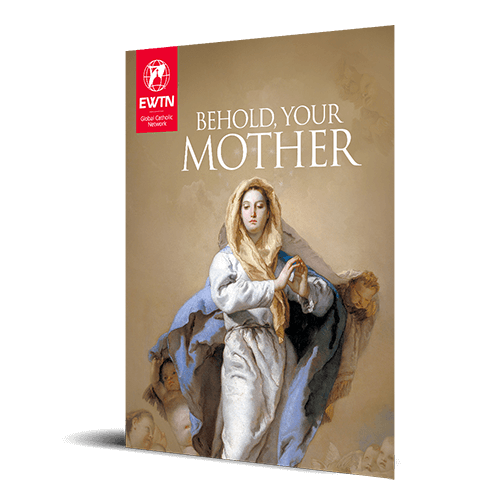
We hope this special eBook will draw you closer to our Blessed Mother and her Son, Jesus Christ. We trust that the pages will bring your heart under her mantle, as we share a few of the beautiful and befitting names bestowed upon the Blessed Virgin Mary.
Be inspired to follow in the footsteps of the saints. Subscribe to receive the Daily Saint, featuring a brief biography delivered to your inbox each day.
Start now and let the intercession and witness of the saints draw you closer to God.

As we deepen our relationship with the Eternal Word, Jesus Christ, we grow in grace and are transformed by His love and mercy.
STEP 1
We’re here to serve you. Let us help you complete your gift with confidence.

Send a message to Mission Advancement.

Guidance for DAFs, stock, IRA, and more.

Manage your gifts and preferences.