

Your Faith Journey with EWTN
As we deepen our relationship with the Eternal Word, Jesus Christ, we grow in grace and are transformed by His love and mercy.
Seventh century–c. 679
Patron Saint of laundry workers, servants, the poor

St. Hunna of Alsace is honored as a saint whose holiness was expressed through ordinary work and extraordinary charity. Living in the seventh century, St. Hunna was a noblewoman to a Duke. She was devoted to her family and to her state of life. The teachings of St. Deodatus of Nevers, who was then a bishop, influenced her, and she began to see the needs of the poor and infirm around her.
St. Hunna was devoted to caring for her family and managing their estate. But when her husband was away resolving political or diplomatic matters, St. Hunna began caring for those unable to care for themselves. She washed their clothes regularly, which would have required demanding labor. It was an act of mercy that required time, strength, and sacrifice. Her willingness to serve and her profound humility earned her the affectionate nickname “the holy washerwoman.”
In addition to washing clothes, St. Hunna began helping the poor, the sick, and the elderly with other tasks they needed, including cleaning, cooking, bathing, and childcare. When their clothes were worn, she would replace them. And she would provide religious instruction, sharing with them the fruits of her life of prayer. After her husband’s death, St. Hunna devoted her life to serving the poor.
St. Hunna and her husband had a son, who was baptized by the saint who had inspired her life. She named her son Deodatus, after the saintly bishop. He became a monk and established a monastery. He was also declared a saint after his death.
St. Hunna died around the year 679. Numerous miracles were attributed to her, and she was formally canonized in 1520.
St. Hunna of Alsace, known as “the holy washerwoman,” had a close spiritual and personal connection with St. Deodatus of Nevers, also known as St. Dié. St. Deodatus was a seventh-century bishop and hermit who founded the monastery of Jointures, around which the town of Saint-Dié grew. He was not only a mentor to St. Hunna’s family but also played a direct role in her family life. St. Hunna and her husband, Huno of Hunnawihr, invited St. Deodatus to live with them for a time after he retired from his position as Bishop of Nevers. During this period, the couple received religious instruction from the bishop during his stay, which helped them grow in their own sanctity. St. Deodatus is believed to have inspired St. Hunna in her dedication to serving the poor and sick. St. Deodatus baptized St. Hunna’s son, and he was named Deodatus in honor of the bishop. St. Hunna’s son became a monk after studying in the monastery founded by St. Deodatus.
St. Hunna was known as “the holy washerwoman.” Her selfless service to the poor teaches us that holiness can be found in loving others as Christ loves, and that humility, the foundation of all other virtues, is a path to sanctity. Despite her high social position as the wealthy wife of a Duke, she left her life of aristocratic privilege. She dedicated herself to washing her neighbors’ clothes and tending to their needs. Beyond laundry, she performed menial tasks, including cooking, cleaning, and caring for children and the sick. St. Hunna was also concerned with their spiritual well-being. She instructed those she cared for in the Faith and supported the Church and religious education by financing the construction of churches and donating her property to monasteries. St. Hunna’s legacy is one of using one’s position to serve others, as she was known to take care of those who had no one to care for them. Canonized in 1520, she is the patron saint of laundry workers and washerwomen.
A shrine to St. Hunna was established in Hunawihr, Alsace, in modern-day France, where she lived and died in the seventh century. A holy and healing well was also located near this shrine, which served as a testament to the miraculous graces associated with her intercession. St. Hunna’s relics were preserved at this holy site until they were destroyed during the Protestant Reformation. Many miracles were reported before and after St. Hunna’s death. She is credited with various miracles that led to her canonization. She is considered a “domestic saint” whose fame was rooted in her pious, humble, and compassionate service to her neighbors. Her legacy as the patron saint of laundresses and laundry workers lives on.
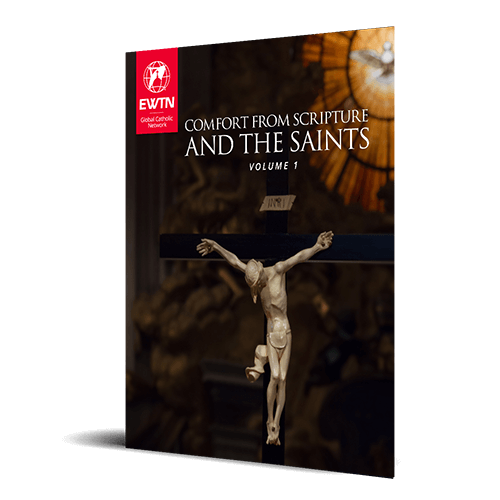
This eBook combines stunning photography from EWTN’s Vatican Bureau along with Bible passages and saints’ quotes that will calm your heart, give you hope, and remind you that God is with us always. Simply fill out the form below and we will send this to you!
Be inspired to follow in the footsteps of the saints. Subscribe to receive the Daily Saint, featuring a brief biography delivered to your inbox each day.
Start now and let the intercession and witness of the saints draw you closer to God.

As we deepen our relationship with the Eternal Word, Jesus Christ, we grow in grace and are transformed by His love and mercy.
STEP 1
We’re here to serve you. Let us help you complete your gift with confidence.

Send a message to Mission Advancement.

Guidance for DAFs, stock, IRA, and more.

Manage your gifts and preferences.