

Your Faith Journey with EWTN
As we deepen our relationship with the Eternal Word, Jesus Christ, we grow in grace and are transformed by His love and mercy.
c. 1067–March 8, 1137
Patron Saint of arts, poets, writers, widows, mothers, noblewomen, those discerning religious life

St. Adela of Normandy was a noblewoman whose life reflected a deep commitment to faith, family, and the Church. Born around 1067, she was the daughter of William the Conqueror and Queen Matilda of Flanders. Raised in a royal court known for its intellectual and spiritual vitality, Adela received a strong education and developed a lifelong devotion to prayer and learning.
As a young woman, St. Adela married Stephen, Count of Blois, one of the most powerful nobles in France. Their marriage produced several children, including Stephen, who would later become King of England. During her husband’s frequent absences, Adela governed their lands with competence and authority, earning respect for her leadership and wisdom. She was known for her strong influence over her family and her ability to guide political affairs while remaining rooted in her faith.
St. Adela was also a generous patron of religious communities. She supported monasteries, encouraged reform, and fostered relationships with prominent Church leaders, including St. Anselm of Canterbury. Her correspondence with clergy reveals a woman deeply concerned with spiritual growth, moral integrity, and the welfare of the Church.
After the death of her husband, Adela gradually withdrew from public life. Later in life, she entered the monastery of Marcigny in Burgundy, France. There, she became a nun and dedicated her life to God in prayer, humility, and service.
St. Adela of Normandy died in 1137. Although she lived amid power and privilege, she is remembered for her devotion, charity, and willingness to surrender herself to God’s will at every stage of her life.
St. Adela exercised significant political authority during her husband’s absences and after his death. She managed estates, resolved disputes, and ensured stability in their territories. Her leadership demonstrated that noblewomen in the medieval period could wield considerable influence. Adela’s governance was marked by prudence and justice, and both nobles and clergy respected her for her competence and moral authority.
St. Adela maintained a close correspondence with St. Anselm, Archbishop of Canterbury and Doctor of the Church. Their letters reflect mutual respect and spiritual friendship. Adela sought St. Anselm’s counsel on matters of faith, family, and leadership, while St. Anselm praised her devotion and moral strength. Their correspondence highlights St. Adela’s deep engagement with theological and spiritual issues beyond her public responsibilities.
After fulfilling her roles as wife, mother, and ruler, St. Adela felt called to dedicate her remaining years entirely to God. Entering the monastery of Marcigny allowed her to live a life of prayer, humility, and detachment from worldly power. Her decision reflects a medieval tradition in which widows embraced religious life as a final offering of themselves to God, seeking holiness through simplicity and community.
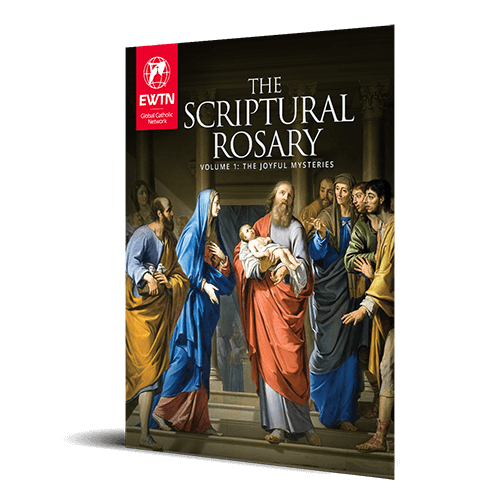
The Holy Rosary is an amazing prayer, encouraged by popes, loved by saints, and prayed by the faithful. At its heart, the Rosary is a meditation on Sacred Scripture, on the lives of Jesus and Mary.
Through this Scriptural Rosary, we hope that you will be able to better meditate on each Hail Mary and deepen your understanding of Sacred Scripture. Use the form below to get your free copy of The Scriptural Rosary.
Be inspired to follow in the footsteps of the saints. Subscribe to receive the Daily Saint, featuring a brief biography delivered to your inbox each day.
Start now and let the intercession and witness of the saints draw you closer to God.

As we deepen our relationship with the Eternal Word, Jesus Christ, we grow in grace and are transformed by His love and mercy.
STEP 1
We’re here to serve you. Let us help you complete your gift with confidence.

Send a message to Mission Advancement.

Guidance for DAFs, stock, IRA, and more.

Manage your gifts and preferences.