

Your Faith Journey with EWTN
As we deepen our relationship with the Eternal Word, Jesus Christ, we grow in grace and are transformed by His love and mercy.
Died in the first century

St. Ananias of Damascus, a devout disciple of Christ, was chosen by God to restore Saul of Tarsus’s sight and baptize him. Saul became known as St. Paul, the Apostle to the Gentiles. St. Ananias’s obedience and courage reveal his fidelity to God’s Will, even in the face of fear.
Living in Damascus, St. Ananias was known among the early Christians for his holiness and charity. The Lord told St. Ananias to find Saul of Tarsus. Knowing that Saul was a persecutor of Christians, St. Ananias was afraid. But he was told that Saul was to become “a chosen instrument” who would carry the Gospel to the nations (Acts 9:15), and he obeyed.
St. Ananias played an essential role in preparing Saul to answer God’s call. He was the first to inform Saul of God’s plan for his life. Repeating what God had told him, he told Saul that God had chosen him to witness to all men and write about what he saw and heard. He also instructed Saul in the Faith and baptized him.
According to early Christian tradition, St. Ananias was one of the 72 disciples that Jesus sent out to proclaim the Kingdom of God. He later preached the Gospel in Damascus and the surrounding regions, eventually serving as its first bishop. St. Ananias was later martyred for the Faith by stoning in a community called Eleutheropolis.
The Via Recta, or Straight Street, in Damascus, Syria, still exists today and follows a route like the one mentioned in the Bible. The street, now called Midhat Pasha Street, remains a major thoroughfare, running east to west through the old city of Damascus, just as it did when St. Ananias healed the Apostle Paul there. Newer structures have replaced the original buildings from the first century, but beneath the modern street, archeological layers provide evidence of its ancient history. A church on the street is said to mark the traditional site of Judas’s house, where St. Ananias healed and baptized Saul of Tarsus. Christian tradition developed over time, marking the area as a significant historical and holy site. Today, this area remains a major thoroughfare in Damascus, and the traditions surrounding the event continue to be observed.
The location of St. Ananias of Damascus is disputed, and no single, universally agreed-upon location for his relics exists. According to Orthodox tradition, the relics of St. Ananias were moved from Damascus to Constantinople after his death. Some sources suggest his relics are in the Basilica of Saint Paul Outside the Walls in Rome. Other sources associate his relics with Armenia, specifically at a church in Yerevan. While not physical relics, there are significant sites dedicated to him, including the ancient underground Chapel of Saint Ananias in Damascus, built over the site believed to be the home where he baptized Paul.
In his speeches to the Jews in the book of Acts, St. Paul recounts how St. Ananias restored his sight. He refers to him as Ananias of Damascus, the disciple who was instrumental in Paul’s conversion and Baptism after his blinding experience on the road to Damascus. St. Paul describes St. Ananias as a devout man according to the law and respected by all the Jews. He details how the Lord sent St. Ananias to restore his sight and commission him as a witness to the Gentiles. St. Paul speaks of St. Ananias as a pious man, hesitant to meet Saul because of his reputation for persecuting Christians. However, he obeyed the Lord’s instruction, laid hands on Saul, and restored his sight. St. Paul’s inclusion of this account in his speech is to show that his conversion and apostleship were directly ordained by God, not initiated by other humans.
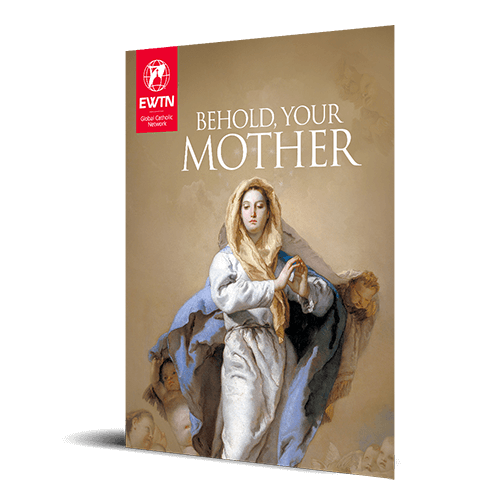
We hope this special eBook will draw you closer to our Blessed Mother and her Son, Jesus Christ. We trust that the pages will bring your heart under her mantle, as we share a few of the beautiful and befitting names bestowed upon the Blessed Virgin Mary.
Be inspired to follow in the footsteps of the saints. Subscribe to receive the Daily Saint, featuring a brief biography delivered to your inbox each day.
Start now and let the intercession and witness of the saints draw you closer to God.

As we deepen our relationship with the Eternal Word, Jesus Christ, we grow in grace and are transformed by His love and mercy.
STEP 1
We’re here to serve you. Let us help you complete your gift with confidence.

Send a message to Mission Advancement.

Guidance for DAFs, stock, IRA, and more.

Manage your gifts and preferences.