

Your Faith Journey with EWTN
As we deepen our relationship with the Eternal Word, Jesus Christ, we grow in grace and are transformed by His love and mercy.
Sixth century–January 22, 628
Patron Saint of goldsmiths, against headaches

St. Anastasius the Persian, also known as St. Anastasius the Monk, was a soldier under King Chosroes II in modern-day Iran. His courage and conversion to Christianity inspired both the Eastern and the Western churches.
St. Anastasius was born in Persia in the late sixth century, the son of a Zoroastrian priest. His given name was Magundat. As a young man, he joined the Persian army and took part in the conquest of Jerusalem in 614, when the relic of the True Cross was seized and carried into Persia.
Witnessing the reverence that Christians had for the Cross of Christ, Magundat was moved by its meaning and began to seek the Truth of the Gospel. Leaving the army, he traveled to Jerusalem and was baptized by St. Modestus, taking the name Anastasius, meaning “the risen one.” He entered the monastery of St. Sabas, embracing a life of prayer, humility, and service.
After seven years of monastic life, St. Anastasius desired to share the Faith with his fellow Persians and journeyed to Persian-held lands in Jerusalem as a missionary. At Caesarea, he boldly proclaimed Christ before Zoroastrian priests. Refusing to renounce his faith, he was imprisoned, tortured, and finally beheaded on January 22, 628, together with 70 other Christians.
St. Anastasius’s body was brought to Palestine, later transferred to Constantinople, and brought finally to Rome. His relics are said to have cured diseases and cast out demons.
St. Anastasius of Persia’s life influenced Christians for centuries. Liturgical music for Holy Week was written in Greek and Latin about his story. Several churches and monasteries were built in his honor, and his relics were widely venerated. His decision to confront the Zoroastrian priests, knowing he would be killed, inspired many Christians. As a former Persian soldier who converted to Christianity after witnessing the reverence for the True Cross, St. Anastasius chose to endure brutal tortures rather than renounce his faith. His ability to resist promises of high honors and wealth in the Persian court, remaining steadfast in his faith, provided a powerful example for other Christians facing persecution.
Tradition holds that St. Anastasius of Persia, a Persian monk martyred in the seventh century, performed miracles. His relics are associated with the curing of diseases and the expulsion of demons, as attested to in the Acts of the Second Council of Nicaea. After death, accounts of healing miracles and exorcisms through intercessions were also reported.
St. Anastasius’s relics are kept in various places. His head is housed in Rome, and his body was preserved in the Greek Monastery of the Three Fountains (Tre Fontane). In the 13th century, his relics were transferred to Venice, Italy, where they are kept at the church of St. Francis of the Vineyard.
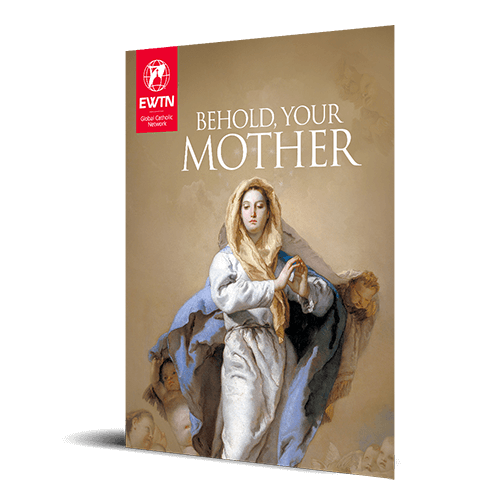
We hope this special eBook will draw you closer to our Blessed Mother and her Son, Jesus Christ. We trust that the pages will bring your heart under her mantle, as we share a few of the beautiful and befitting names bestowed upon the Blessed Virgin Mary.
Be inspired to follow in the footsteps of the saints. Subscribe to receive the Daily Saint, featuring a brief biography delivered to your inbox each day.
Start now and let the intercession and witness of the saints draw you closer to God.

As we deepen our relationship with the Eternal Word, Jesus Christ, we grow in grace and are transformed by His love and mercy.
STEP 1
We’re here to serve you. Let us help you complete your gift with confidence.

Send a message to Mission Advancement.

Guidance for DAFs, stock, IRA, and more.

Manage your gifts and preferences.