

Your Faith Journey with EWTN
As we deepen our relationship with the Eternal Word, Jesus Christ, we grow in grace and are transformed by His love and mercy.
March 27, 1416–April 2, 1507
Patron Saint of Paola, Calabria; sailors; naval officers; the sick; the poor; those seeking humility and penance; hermits

St. Francis of Paola was a man of profound humility whose holiness inspired countless people to seek God more deeply. He lived a life of total trust in God and showed profound respect for every living being, caring for people and animals with great love.
St. Francis was born in the early 15th century in the town of Paola, in southern Italy. As an infant, he suffered from a serious illness that threatened his life. His parents prayed fervently to St. Francis of Assisi for his recovery and promised to dedicate him to God if he recovered. When his miraculous recovery occurred, his parents placed him with Franciscan friars for a year to fulfill a vow made for his recovery.
As a young man, St. Francis felt called to a life of solitude and prayer. After spending time with the Franciscan friars, he withdrew to a cave near Paola at age 15 to live as a hermit.
St. Francis’s holiness soon drew others who desired to follow his example. The small communities initially formed the Order of Hermits of St. Francis of Assisi. When Rome approved his order, the pope changed its name to the Order of the Minims, to emphasize humility and their call to be “the least” in the service of God. The Minims led a strict penitential life, taking a vow of perpetual abstinence from meat and animal products.
St. Francis was known for his compassion toward the poor and the sick. Many miracles were attributed to his prayers, including physical and spiritual healings and extraordinary acts of divine assistance. Late in life, St. Francis was called to the French court at the request of King Louis XI, who was terminally ill and hoped for a healing. Believing rulers had an appointed time known by God, St. Francis provided spiritual comfort and prepared the king for eternal life.
Numerous healing miracles were attributed to St. Francis, including raising the dead. He died on Good Friday, April 2, 1507, surrounded by his brother friars. He was canonized in 1519.
St. Francis of Paola was renowned for numerous miracles. According to accounts, these included healing the blind, lame, and deaf, controlling nature, and raising people from the dead, including a man and a child who had been hanged. St. Francis also revived his pet lamb and a fish that had been stolen for food. Other miracles included prophetic warnings, exorcisms, and the ability to avert plagues. He was said to have moved large rocks, caused springs to flow from dry ground, and controlled elements like fire and water. The most famous miracle attributed to St. Francis was his crossing of the Strait of Messina to Sicily on his cloak when a boat was not available. This incident led to his patronage of sailors. These miracles were performed with deep humility and charity, often in direct response to needs or to glorify God. These extraordinary signs helped establish his spiritual authority.
St. Francis of Paola founded numerous monasteries for men and women who joined his order, the Order of Minims. While a specific total number is not known, he established at least seven key foundations in Southern Italy in the 1460s and 1470s and several others in France. Monasteries founded by St. Francis of Paola are still active today, particularly in Italy, although the order experienced significant declines during the French Revolution. The Sanctuary of St. Francis of Paola (Calabria, Italy) is the motherhouse that grew from his original hermitage and remains an active, prominent sanctuary. A monastery of Minim nuns, founded under his spiritual guidance, remains located just above the Paola sanctuary. Globally, the Federation of Minim Nuns still includes 14 monasteries across Italy, Spain, Mexico, and the Philippines. A Third Order of Minims for laypeople is also still active today.
The Rule of the Order of Minims was unique primarily because it introduced a fourth religious vow: a commitment to a “perpetual Lenten way of life” through penitential abstinence. This fourth vow bound members to lifelong abstinence from all meat; eggs; dairy products like milk, butter, and cheese; and fish. This commitment to a rigorous, penitential lifestyle went beyond the traditional three vows of poverty, chastity, and obedience observed by other mendicant orders, such as the Franciscans. The Minims viewed themselves as the “least” (minimi) of all religious, reflecting their charism of humility. A friar could be released from the vow only in cases of grave illness, with a doctor’s prescription and the superior’s permission.
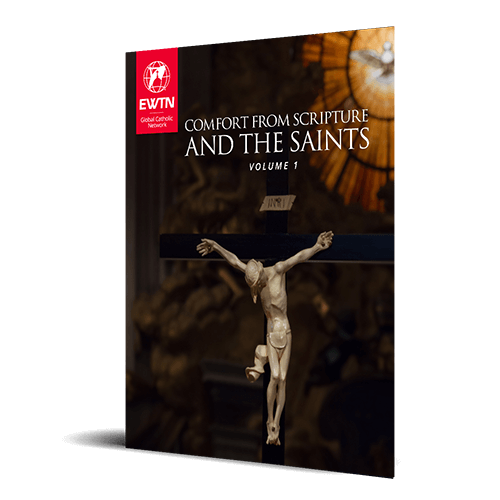
This eBook combines stunning photography from EWTN’s Vatican Bureau along with Bible passages and saints’ quotes that will calm your heart, give you hope, and remind you that God is with us always. Simply fill out the form below and we will send this to you!
Be inspired to follow in the footsteps of the saints. Subscribe to receive the Daily Saint, featuring a brief biography delivered to your inbox each day.
Start now and let the intercession and witness of the saints draw you closer to God.

As we deepen our relationship with the Eternal Word, Jesus Christ, we grow in grace and are transformed by His love and mercy.
STEP 1
We’re here to serve you. Let us help you complete your gift with confidence.

Send a message to Mission Advancement.

Guidance for DAFs, stock, IRA, and more.

Manage your gifts and preferences.