

Your Faith Journey with EWTN
As we deepen our relationship with the Eternal Word, Jesus Christ, we grow in grace and are transformed by His love and mercy.
March 1, 1838–February 27, 1862
Patron Saints of students, young people, clerics, seminarians, those discerning religious life, those suffering illness

At the funeral of St. Gabriel of Our Lady of Sorrows, one of his fellow seminarians said, “Tears come to my eyes, and I am filled with shame for having been so far from the virtues that he attained in such a short time.”
St. Gabriel of Our Lady of Sorrows was a young Passionist seminarian who touched many lives in his time and continues to inspire Catholics around the world. Born Francesco Possenti in Assisi, Italy, in 1838, he was the eleventh of 13 children. After his mother’s death, his family moved several times, and Francesco matured quickly while remaining cheerful and sociable.
St. Gabriel was stricken twice with serious illnesses during his younger years. Each time, he promised that if he recovered, he would dedicate his life to God, but once he regained his health, he forgot about his promise.
A turning point came during a church procession, when he experienced a deep call to give his life entirely to God. St. Gabriel saw a banner of the Blessed Virgin being carried. He felt Our Lady’s eyes meet his, and he heard the words, “Keep your promise.” Realizing he had failed to keep his promise to God, he entered the Congregation of the Passion at age 18.
As a Passionist novice, he took the name Gabriel of Our Lady of Sorrows, reflecting his intense devotion to the Blessed Virgin and to the Passion of Christ. St. Gabriel lived a life of prayer, penance, and obedience. St. Gabriel’s fellow religious knew him as joyful and always ready to serve others. His deep interior life was rooted in love for Christ Crucified.
Four years into his novitiate, St. Gabriel was stricken with tuberculosis. He accepted his suffering with remarkable peace and spiritual maturity, offering his illness to God in union with Christ’s Passion. He died on February 27, 1862, at age 24, one year before he was to be ordained. He was canonized in 1920 by Pope Benedict XV.
St. Gabriel is associated with numerous miracles, especially after his death, with his tomb becoming a site for cures, conversions, and extraordinary graces. Healings were reported from tuberculosis and inoperable hernias that advanced his cause for canonization. Reported cures at his tomb included healing of the deaf, dumb, blind, and lame. St. Gemma Galgani credited St. Gabriel with curing her of a dangerous illness and leading her to her own religious vocation. He has also been credited with lifting depression and reconciling marriages. These signs confirm his powerful intercession.
His devotion to Our Lady of Sorrows was integral to the Passionist Order’s charism, as Mary appeared to the founder, St. Paul of the Cross, calling him to establish the order. St. Gabriel had a profound devotion to Mary under the title of Our Lady of Sorrows. St. Gabriel saw Our Lady as a model of faithful love amid suffering, since she endured the sufferings of her Son, which pierced her soul. This devotion deepened his understanding of Christ’s Passion and helped him unite his own suffering with Christ’s redemptive sacrifice, especially during his final illness.
Although St. Gabriel lived a short life, he left behind letters and personal writings that reveal his deep spirituality, humility, and love for God. These writings reflect a soul fully surrendered to God’s will and provide insight into how ordinary fidelity and prayer can lead to extraordinary holiness. Other writings of his were lost, but those that survived include 27 letters, primarily to family, with significant insight into his spiritual journey, character, and deep love for his family and faith. St. Gabriel also wrote a Canticle in honor of the Blessed Mother, based on the teachings of various saints and Doctors of the Church, and several prayers. A detailed list of resolutions that he faithfully kept, serving as a roadmap to his spiritual progress and daily life, also survived. These writings have been compiled and published in various forms.
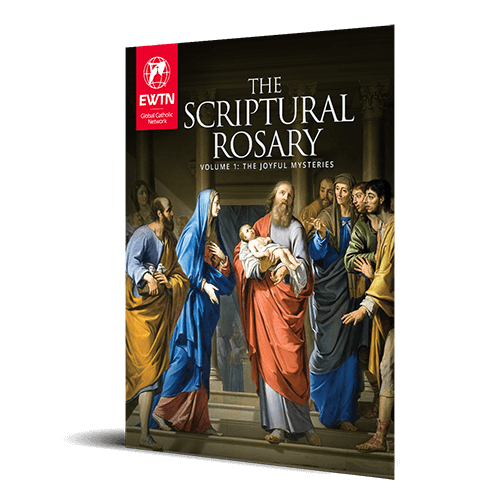
The Holy Rosary is an amazing prayer, encouraged by popes, loved by saints, and prayed by the faithful. At its heart, the Rosary is a meditation on Sacred Scripture, on the lives of Jesus and Mary.
Through this Scriptural Rosary, we hope that you will be able to better meditate on each Hail Mary and deepen your understanding of Sacred Scripture. Use the form below to get your free copy of The Scriptural Rosary.
Be inspired to follow in the footsteps of the saints. Subscribe to receive the Daily Saint, featuring a brief biography delivered to your inbox each day.
Start now and let the intercession and witness of the saints draw you closer to God.

As we deepen our relationship with the Eternal Word, Jesus Christ, we grow in grace and are transformed by His love and mercy.
STEP 1
We’re here to serve you. Let us help you complete your gift with confidence.

Send a message to Mission Advancement.

Guidance for DAFs, stock, IRA, and more.

Manage your gifts and preferences.