

Your Faith Journey with EWTN
As we deepen our relationship with the Eternal Word, Jesus Christ, we grow in grace and are transformed by His love and mercy.
c. 532–March 28, 592
Patron Saint of rulers and leaders seeking justice, peacemakers, those seeking repentance, and the city of Orléans

St. Guntram, King of Wales, was a Christian king whose life reflects the transforming power of repentance and mercy. Born around 532, he was the son of King Clotaire I and became King of Burgundy in 561. His reign unfolded during a violent and unstable period in Frankish history, wrought with family rivalries and political conflicts.
Early in his reign, St. Guntram lived a life devoid of Christian values. However, repeated personal losses, including the deaths of his children, led him to reflect deeply on his life and responsibilities. Over time, St. Guntram experienced a sincere conversion of heart. He felt deep remorse for his past sins and atoned for them by fasting, praying, and offering himself in service to God.
As his faith deepened, St. Guntram sought to rule with mercy and fairness. He provided for the poor, supported the Church, and promoted peace among warring factions. He established and endowed monasteries, protected the oppressed, cared for the sick, and used his wealth to help the people of his kingdom during times of famine and plague.
St. Guntram became known for his justice and compassion. As a peacemaker, he sought reconciliation amid family rivalries and political divisions. His concern for unity reflected his growing humility and trust in God’s Providence.
St. Guntram died on March 28, 592. He was buried in the Church of St. Marcellus, which he had established in Chalon. St. Gregory of Tours called him “Good King Guntram.” According to St. Gregory, the king performed miracles before and after his death.
St. Guntram once discovered a man, asleep in his bed, who confessed under torture to being hired by Queen Fredegund to assassinate him, a story recorded by St. Gregory of Tours. Queen Fredegund, St. Guntram’s sister-in-law, was known for her ruthlessness. Early in his reign, St. Guntram and his brothers were often embroiled in conflicts over territory in the kingdom. Under torture, the would-be assassin confessed, implicating Queen Fredegund’s envoys. While the sleeping assassin was tortured further, St. Guntram only banished the envoys, despite the clear implication of his powerful sister-in-law’s plot to kill him.
St. Guntram experienced a deep conversion prompted by profound, heartfelt remorse for the sinful, violent behavior that characterized his early reign. He felt immense guilt for his past actions, specifically ordering the murder of a physician who failed to cure his second wife, who was stricken with illness. King Guntram was enraged at the doctor for his wife’s death and had him murdered. The king had four sons by three women, and all his sons died. One was poisoned, one died soon after birth, and two fell ill and passed away. Thus, he was left with no heirs. St. Guntram felt his previous actions had provoked Divine Justice in the death of his four sons.
Upon his conversion, he sought to make reparation for his past sins through severe penance, including fasting, prayer, and weeping. St. Guntram’s life was utterly transformed. He became renowned for his generosity toward the poor, sick, and suffering. He used royal resources to provide food for the poor, offer care for the sick, and support monasteries and churches. He often personally intervened to protect the vulnerable and ensure fair treatment, seeing acts of mercy as essential to his role as a Christian ruler.
Gregory of Tours knew St. Guntram through a close, trusted relationship as bishop and king. St. Guntram often sought counsel from St. Gregory and valued his advice. St. Gregory knew and trusted the king. As Bishop of Tours, he was in direct contact with St. Guntram, who ruled the region of Tours for a time, leading to a period of peace. He observed St. Guntram’s deep piety, noting his attendance at services, fasting, and charity. The bishop recorded stories and observed miraculous healing he attributed to the king, which led him to consider St. Guntram a saintly figure during his lifetime. St. Gregory’s writings, especially in the History of the Franks, detail St. Guntram’s virtuous rule, justice, and acts of forgiveness, often based on his personal knowledge or accounts from those close to the king.
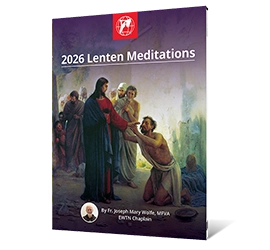
Prepare your soul for the glorious Resurrection with free weekly prayers and reflections from EWTN Chaplain Fr. Joseph Mary Wolfe, MFVA—exploring the healing power of Christ’s love. You’ll also receive weekly emails from Fr. Joseph beginning on Ash Wednesday, continuing each Sunday of Lent and Easter Sunday.
Draw closer to Our Lord as you pause, meditate, and return to Him with your whole heart.
Send me the Physical Pocket Guide
Only available to homes in the U.S.A.
Send me the
eBook
Be inspired to follow in the footsteps of the saints. Subscribe to receive the Daily Saint, featuring a brief biography delivered to your inbox each day.
Start now and let the intercession and witness of the saints draw you closer to God.

As we deepen our relationship with the Eternal Word, Jesus Christ, we grow in grace and are transformed by His love and mercy.
STEP 1
We’re here to serve you. Let us help you complete your gift with confidence.

Send a message to Mission Advancement.

Guidance for DAFs, stock, IRA, and more.

Manage your gifts and preferences.