

Your Faith Journey with EWTN
As we deepen our relationship with the Eternal Word, Jesus Christ, we grow in grace and are transformed by His love and mercy.
c. 1053–April 1, 1132
Patron Saint of Grenoble, France; headache sufferers

St. Hugh of Grenoble served as a faithful shepherd of the Church during the aftermath of the Great Schism and moral decline among the clergy.
Born around 1053 into a noble family in southeastern France, St. Hugh was well educated and was pious and disciplined from an early age. His life took a dramatic turn in 1080 when he attended a Church council in Rome. There, Pope Gregory VII unexpectedly appointed the young cleric as Bishop of Grenoble.
St. Hugh accepted the office reluctantly, aware of his own limitations and the daunting state of the diocese entrusted to him. When he arrived in Grenoble, he discovered widespread corruption among the clergy, including simony and neglect of pastoral duties. St. Hugh committed himself fully to reform. Through personal example, firm governance, and patient teaching, he worked to restore integrity, discipline, and sanctification within the diocese.
The weight of responsibility often pressed heavily upon him. At times, St. Hugh felt overwhelmed by opposition and by his own sense of unworthiness. He made several attempts to resign his office and retire to a monastic life, but obedience repeatedly called him back to his episcopal duties. His perseverance bore lasting fruit, and the diocese of Grenoble gradually experienced renewal.
St. Hugh also played a significant role in the growth of monastic life. He was a close friend and supporter of St. Bruno and helped establish the Grande Chartreuse, the motherhouse of the Carthusian Order. St. Hugh provided land, protection, and encouragement to the small group of hermits seeking a life of prayer and silence.
After more than 50 years as bishop, St. Hugh died on April 1, 1132. Canonized only two years later, he is remembered as a gentle reformer, a faithful pastor, and a man who trusted God through years of difficulty and service.
St. Hugh played a crucial role in the founding of the Carthusian Order. He welcomed St. Bruno and his companions, giving them secluded land in the Chartreuse mountains to establish in 1084 La Grande Chartreuse, the first Carthusian hermitage, which became their motherhouse. St. Hugh also protected and encouraged the hermits, became a devoted supporter, visited them, participated in their austere life, and helped with various tasks.
St. Hugh of Grenoble repeatedly sought to resign because of his profound humility. He felt unworthy to undertake the immense task of reforming the corruption in his diocese. He also yearned for the solitary monastic life of prayer as a Benedictine monk. He attempted to enter a monastery at least twice, but the popes always commanded him back. They recognized St. Hugh’s effectiveness as a reformer and the need for his leadership in restoring order and spiritual renewal in his diocese. St. Hugh’s fervent preaching, strong character, and defense of Church rights proved highly successful in revitalizing his diocese. Through Divine Providence, God used St. Hugh’s reluctant leadership to bring about significant reform and to establish the Carthusian Order.
The “Cartularies of Saint Hugh” are legal documents resulting from an agreement negotiated by St. Hugh that ended years of strife and helped establish the diocese’s rights over its properties.
Although St. Hugh preferred avoiding conflict and spending time in prayer, he was constantly forced to resolve issues within his diocese. At one point, St. Hugh had to deal with a long-standing conflict with Count Guigues III of Albon over the possession of lands belonging to his diocese. After years-long negotiations, an agreement was reached in 1099: the Count returned disputed Church territories, and St. Hugh agreed to the Count’s temporal authority within Grenoble’s vicinity. While specific to Grenoble, this case aligned with broader Gregorian reforms aimed at asserting the Church’s authority over its property.
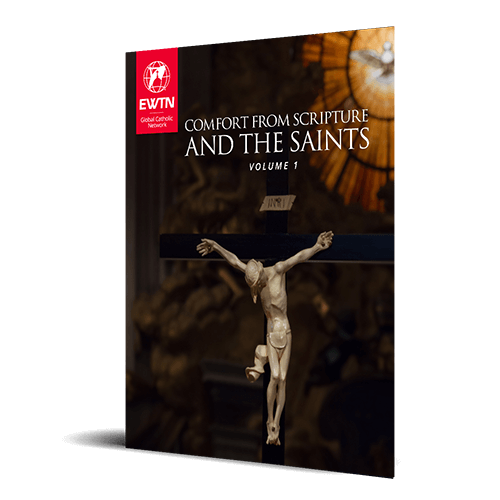
This eBook combines stunning photography from EWTN’s Vatican Bureau along with Bible passages and saints’ quotes that will calm your heart, give you hope, and remind you that God is with us always. Simply fill out the form below and we will send this to you!
Be inspired to follow in the footsteps of the saints. Subscribe to receive the Daily Saint, featuring a brief biography delivered to your inbox each day.
Start now and let the intercession and witness of the saints draw you closer to God.

As we deepen our relationship with the Eternal Word, Jesus Christ, we grow in grace and are transformed by His love and mercy.
STEP 1
We’re here to serve you. Let us help you complete your gift with confidence.

Send a message to Mission Advancement.

Guidance for DAFs, stock, IRA, and more.

Manage your gifts and preferences.