

Your Faith Journey with EWTN
As we deepen our relationship with the Eternal Word, Jesus Christ, we grow in grace and are transformed by His love and mercy.
1580–March 10, 1615
Patron Saint of Scotland, priests, converts to Catholicism, those persecuted for their faith

St. John Ogilvie was a courageous Jesuit priest whose witness to the Catholic Faith led to his martyrdom during one of Scotland’s most violent periods of religious persecution. Born in 1579 to a Calvinist noble family, St. John was sent abroad for his education. While studying in Europe, he encountered Catholic teaching and gradually embraced the Faith, entering the Catholic Church in his late teens.
Desiring to serve Christ fully, St. John was ordained a Jesuit priest in France. Knowing that he was risking his life, he volunteered for the Scottish mission, where the practice of the Catholic Faith was forbidden by law.
Returning to Scotland in disguise, St. John ministered secretly for about a year. He celebrated Mass in hidden locations, heard Confessions, and strengthened Catholics living under constant threat. He received a few converts despite continuous danger, and it was an informer posing as a convert who turned him in to the authorities.
St. John was arrested in Glasgow in 1614. During months of imprisonment, St. John endured harsh treatment and torture. He was pressured to accept the king’s supremacy over the Church, but he consistently refused, maintaining that spiritual authority belonged to the pope, not the king. St. John’s calm courage and unwavering faith made a strong impression even on some of his captors.
On March 10, 1615, St. John Ogilvie was condemned for treason and hanged at Glasgow Cross. Canonized in 1976, he is remembered as Scotland’s only Catholic martyr from the post-Reformation era.
The State secretly buried St. John Ogilvie’s remains in a criminal’s graveyard, leaving no known relics that Catholics could venerate. His veneration was suppressed under Scottish law at the time because he was executed for treason and considered a criminal by the State. Today, Catholics in Scotland and elsewhere venerate his memory at his shrine in St. Aloysius’s Church in Glasgow and honor him as the only post-Reformation Scottish saint.
St. John Ogilvie was charged with treason and executed for upholding the pope’s spiritual authority over the king’s. According to accounts, as the executioner pushed St. John from the scaffold, he threw his Rosary into the crowd of onlookers. A Hungarian nobleman, Jean de Eckersdorff, who was visiting Glasgow, caught it. Eckersdorff, a Calvinist, was so moved by the incident that he later converted to Catholicism, attributing his conversion to St. John’s Rosary.
St. John Ogilvie’s martyrdom significantly impacted religious freedom in Scotland by becoming a powerful symbol of Catholic defiance against royal authority. St. John’s sacrifice motivated students at the Scots College in Rome to take a vow to become priests and return to Scotland, transforming the college into a seminary in 1616. His refusal to renounce Catholicism or acknowledge King James VI’s spiritual supremacy, despite torture, inspired a strong Catholic identity in Scotland and strengthened the cause for religious freedom. St. John’s martyrdom, intended to silence the Faith, instead became a cause for its growth.
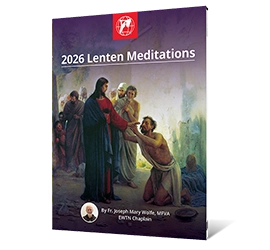
Prepare your soul for the glorious Resurrection with free weekly prayers and reflections from EWTN Chaplain Fr. Joseph Mary Wolfe, MFVA—exploring the healing power of Christ’s love. You’ll also receive weekly emails from Fr. Joseph beginning on Ash Wednesday, continuing each Sunday of Lent and Easter Sunday.
Draw closer to Our Lord as you pause, meditate, and return to Him with your whole heart.
Send me the Physical Pocket Guide
Only available to homes in the U.S.A.
Send me the
eBook
Be inspired to follow in the footsteps of the saints. Subscribe to receive the Daily Saint, featuring a brief biography delivered to your inbox each day.
Start now and let the intercession and witness of the saints draw you closer to God.

As we deepen our relationship with the Eternal Word, Jesus Christ, we grow in grace and are transformed by His love and mercy.
STEP 1
We’re here to serve you. Let us help you complete your gift with confidence.

Send a message to Mission Advancement.

Guidance for DAFs, stock, IRA, and more.

Manage your gifts and preferences.