

Your Faith Journey with EWTN
As we deepen our relationship with the Eternal Word, Jesus Christ, we grow in grace and are transformed by His love and mercy.
Late 5th Century–c. 559
Patron Saint of political prisoners, imprisoned people, prisoners of war, captives, women in labor, horses

St. Leonard of Noblac was born into a noble Frankish family during the reign of King Clovis I. His godfather was St. Remigius, the bishop who baptized King Clovis and brought Christianity to the Franks. Leonard grew up close to the royal court, but even from an early age, he felt God calling him to a different kind of life.
Bishop Remigius offered St. Leonard a bishopric, but he turned it down. Instead of seeking titles or power, Leonard chose the discipline of prayer, simplicity, and service. He spent time at the monastery of Micy near Orléans and later lived in the quiet forests of Limousin as a hermit. Living off the land, he dedicated himself to God—but his solitude didn’t last long. Word spread about his holiness, and people began to seek him out.
St. Leonard became known for his compassion toward prisoners. The king gave him authority to release prisoners he found deserving. Stories tell of shackles falling miraculously from those who prayed through his intercession. Many freed captives stayed with him, working the land and forming a small community. His care extended to women in difficult childbirth as well; in one famous story, his prayers helped the queen deliver safely, leading King Clovis to reward him with land where he founded the abbey at Noblac.
Leonard died around 559, but devotion to him spread quickly. During the Middle Ages, he was one of the most venerated saints in Europe. Pilgrims carried stories of him along the route to Santiago de Compostela, a path in Spain walked by pilgrims honoring St. James the Apostle. Many churches were dedicated to him in his honor.
Today, St. Leonard is remembered as the patron saint of prisoners, captives, and women in labor.
St. Leonard wanted to live closer to God and free from distractions. He was a humble man who chose prayer, discipline, and simplicity over wealth and titles. Despite his noble background and position, he felt called to a contemplative life, first at the monastery in Micy and then in seclusion in Limousin.
Broken chains remind us of the prisoners St. Leonard freed through prayer. They’re also a symbol of the freedom God gives us from sin and despair through His forgiveness. Broken chains also point to St. Leonard’s role as patron saint of captives and illustrate how faith and compassion can set people free.
When St. Leonard’s prayers helped the queen during a challenging childbirth experience, King Clovis rewarded St. Leonard with a large plot of land. Leonard built a monastery there, and a community grew around it. As a result, he was recognized as a powerful spiritual intercessor. After founding the abbey, St. Leonard began his role as a spiritual leader whose compassion and sanctity shaped his life’s work and enduring legacy.
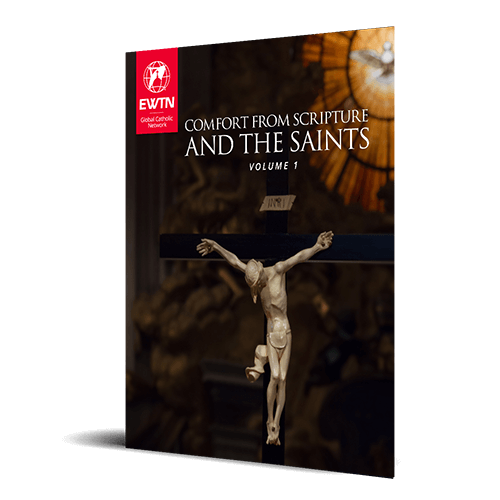
This eBook combines stunning photography from EWTN’s Vatican Bureau along with Bible passages and saints’ quotes that will calm your heart, give you hope, and remind you that God is with us always. Simply fill out the form below and we will send this to you!
Be inspired to follow in the footsteps of the saints. Subscribe to receive the Daily Saint, featuring a brief biography delivered to your inbox each day.
Start now and let the intercession and witness of the saints draw you closer to God.

As we deepen our relationship with the Eternal Word, Jesus Christ, we grow in grace and are transformed by His love and mercy.
STEP 1
We’re here to serve you. Let us help you complete your gift with confidence.

Send a message to Mission Advancement.

Guidance for DAFs, stock, IRA, and more.

Manage your gifts and preferences.