

Your Faith Journey with EWTN
As we deepen our relationship with the Eternal Word, Jesus Christ, we grow in grace and are transformed by His love and mercy.
c. 892–March 14, 968
Patron Saint of large families, widows, the falsely accused

St. Matilda, Queen of Germany, was a woman whose faith and charity left an enduring mark on both the Church and her kingdom. Born around 892 into a prominent noble family, she was raised in an abbey where her grandmother was the abbess. Her family arranged a marriage with King Henry I, later called Henry the Fowler, and their union brought peace and prosperity to the kingdom.
As queen, St. Matilda combined political influence with spiritual concern. She was known for her generosity, establishing and supporting monasteries and providing charitable works for those in need.
After the death of her husband, St. Matilda devoted herself entirely to serving God and caring for the poor. She founded monasteries and churches and was known as a unifier and a peacemaker. Her guidance helped shape both the political and spiritual life of her kingdom.
St. Matilda remained active in political matters, supporting her son, Otto I, who would become the first Holy Roman Emperor. She founded several monasteries, using the inheritance she received after the king’s death.
St. Matilda’s sons, Otto and Henry, accused her of squandering the family inheritance on “strangers” and claimed ownership of her inheritance. Wishing to avoid conflict, St. Matilda relinquished her wealth to her sons and stepped down from public life. She was later reconciled with Otto and Henry and regained some influence before her death, dedicating her later years to religious foundations.
St. Matilda died peacefully on March 14, 968. She was buried at the Quedlinburg Monastery alongside her husband.
St. Matilda established many churches, convents, and monasteries, which served as centers of faith, learning, and charity. These monasteries were located at Quedlinburg, Nordhausen, Engern, and Poehlden. She used her position and personal wealth to provide for the Church and its clergy, ensuring they could continue their work. She promoted religious education, particularly for young women educated in the convents she founded. She provided charitable services for the poor, the sick, and the marginalized. St. Matilda’s generosity and dedication to religious causes were so extensive that her sons, Otto and Henry, even accused her of squandering the crown’s wealth. Despite this conflict, she persisted in her efforts, leading to her immediate veneration as a saint after her death.
St. Matilda is the patron saint of widows and large families. She lost her husband after 17 years of marriage and never remarried. They had five children, all of whom either served the Church or held royal titles. She is also the patron saint of parents facing conflicts or disappointment with their grown children, as she experienced this with her sons, Otto and Henry. She faced ridicule from her sons for her extreme generosity and is sometimes invoked by those mocked for their faith. After her husband’s death, her sons, Otto and Henry, confiscated her lands because of her extensive charitable works. St. Matilda retired and later reconciled with her sons. She continued her charitable work until she died in 968.
St. Matilda has been venerated for centuries as a model of piety, charity, and motherhood. Recognized for having lived a virtuous life, she continues to be revered for her selfless use of wealth to build churches and monasteries, her care for the poor, and her humility. St. Matilda’s body rests in Quedlinburg Abbey in Germany, a significant site for her veneration today.
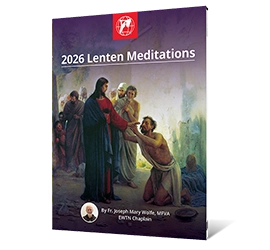
Prepare your soul for the glorious Resurrection with free weekly prayers and reflections from EWTN Chaplain Fr. Joseph Mary Wolfe, MFVA—exploring the healing power of Christ’s love. You’ll also receive weekly emails from Fr. Joseph beginning on Ash Wednesday, continuing each Sunday of Lent and Easter Sunday.
Draw closer to Our Lord as you pause, meditate, and return to Him with your whole heart.
Send me the Physical Pocket Guide
Only available to homes in the U.S.A.
Send me the
eBook
Be inspired to follow in the footsteps of the saints. Subscribe to receive the Daily Saint, featuring a brief biography delivered to your inbox each day.
Start now and let the intercession and witness of the saints draw you closer to God.

As we deepen our relationship with the Eternal Word, Jesus Christ, we grow in grace and are transformed by His love and mercy.
STEP 1
We’re here to serve you. Let us help you complete your gift with confidence.

Send a message to Mission Advancement.

Guidance for DAFs, stock, IRA, and more.

Manage your gifts and preferences.