

Your Faith Journey with EWTN
As we deepen our relationship with the Eternal Word, Jesus Christ, we grow in grace and are transformed by His love and mercy.
c. 389–c. 461
Patron Saint of Ireland, engineers, paralegals, migrants, against snakes

St. Patrick, the Apostle of Ireland, was a missionary bishop whose faith and perseverance helped shape the spiritual identity of an entire nation. Born into a Christian family in Britain, St. Patrick’s early faith was nominal at best. At the age of sixteen, he was captured by barbarians and taken to Ireland as a slave, where he was forced to tend sheep in isolation and hardship.
During his six years in captivity, St. Patrick turned to prayer. He later wrote that God used this suffering to awaken his faith and deepen his trust in His Divine Providence. After escaping and returning home, St. Patrick began religious studies and eventually discerned a call to the priesthood and to return to the land of his captivity to evangelize the people.
St. Patrick consecrated his life to God and vowed to take His name to the ends of the earth. Years later, St. Patrick was ordained a bishop and returned to Ireland as a missionary. He traveled extensively, preaching the Gospel, baptizing converts, and establishing Christian communities. Despite facing hostility from pagan leaders and enduring many dangers, St. Patrick won hearts for Christ through charity, humility, and profound faith.
St. Patrick emphasized humility throughout his life, frequently describing himself as unlearned and unworthy of his mission. Yet through God’s grace, his efforts bore lasting fruit. By the time of his death, Christianity had taken deep root in Ireland, influencing its culture, education, and spiritual life for centuries to come.
St. Patrick died around the year 461. His steadfast faith and the miracles that followed from it converted Druid leaders, kings, and a vast pagan population to Christianity. He left a lasting spiritual legacy, raising many saints in Ireland. He is honored as Ireland’s patron saint.
St. Patrick is associated with many miracles. In his own writings, the Confessio, he mentions working miracles, including raising people from the dead, stating that the Lord gave him power to work wonders among the “barbarous people.” St. Patrick claimed in his writings to have raised 33 people from the dead; specific stories include reviving a king long enough for Baptism and bringing two daughters of a chieftain back to life. He was also known to have restored sight to the blind and health to the sick. He once prayed for food for starving sailors, and a herd of wild swine appeared, which they slaughtered and ate. Reflecting on his life and faith, St. Patrick emphasizes in his writings the gift of God’s grace at work in his weaknesses that made possible the work he was to accomplish.
St. Patrick didn’t just introduce Christianity; he rooted it deeply in Irish society, creating a lasting spiritual and cultural identity. He transformed Ireland from paganism into a Christian nation. He challenged existing power structures, opposed the practice of slavery, and reshaped social boundaries within the new Christian framework. He baptized tens of thousands of souls and converted entire kingdoms. He won the respect of tribal leaders by engaging with them directly. He established hundreds of churches and monasteries that became centers for learning and faith. He ordained Irish deacons, priests, and bishops, building a self-sustaining Church structure. St. Patrick’s work created an Irish Church that was unique to Ireland and distinct from Rome, fostering a powerful wave of missionary activity.
According to longstanding tradition, St. Patrick was buried in Downpatrick, in present-day Northern Ireland. A large stone bearing his name marks the site where he is said to rest, alongside Sts. Brigid and Columba. While the exact location of his grave remains uncertain, Downpatrick, County Down, has been recognized as an important pilgrimage site for centuries, reflecting enduring devotion to the great Apostle of Ireland.
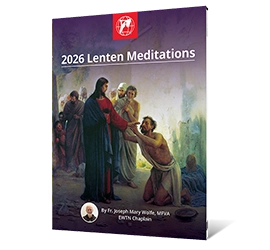
Prepare your soul for the glorious Resurrection with free weekly prayers and reflections from EWTN Chaplain Fr. Joseph Mary Wolfe, MFVA—exploring the healing power of Christ’s love. You’ll also receive weekly emails from Fr. Joseph beginning on Ash Wednesday, continuing each Sunday of Lent and Easter Sunday.
Draw closer to Our Lord as you pause, meditate, and return to Him with your whole heart.
Send me the Physical Pocket Guide
Only available to homes in the U.S.A.
Send me the
eBook
Fr. Nathan Cromly leads a group of Catholic pilgrims on an inspirational pilgrimage to the Emerald Isle, where they trace the path of Ireland’s patron, St. Patrick, recalling his life and missionary zeal.
Fr. Chris addresses some legends attributed to the real St. Patrick and explains how his proposal of Christianity affected the Irish people and helped preserve world history.
Mike Aquilina looks ahead to the feast day of St. Patrick and his many miracles, including claims that he raised people from the dead. Author Scott L. Smith has a new book about the incredible phenomena of NDEs—Near-Death Experiences—and the mystics and saints who experienced them.
Be inspired to follow in the footsteps of the saints. Subscribe to receive the Daily Saint, featuring a brief biography delivered to your inbox each day.
Start now and let the intercession and witness of the saints draw you closer to God.

As we deepen our relationship with the Eternal Word, Jesus Christ, we grow in grace and are transformed by His love and mercy.
STEP 1
We’re here to serve you. Let us help you complete your gift with confidence.

Send a message to Mission Advancement.

Guidance for DAFs, stock, IRA, and more.

Manage your gifts and preferences.