

Your Faith Journey with EWTN
As we deepen our relationship with the Eternal Word, Jesus Christ, we grow in grace and are transformed by His love and mercy.
c. 227 A.D.–c. 341 A.D.
Patron Saint of hermits and ascetics, basket weavers, the Order of St. Paul the First Hermit, San Pablo, Philippines

St. Paul the First Hermit, also known as Paul of Thebes, is traditionally honored as the first Christian hermit. Born in Thebes, Egypt, into a wealthy Christian family in the third century, St. Paul received a classical education and was fluent in both Greek and Egyptian. When he and his newly married sister lost their parents, St. Paul’s brother-in-law sought to seize his inheritance by betraying him to the authorities under Emperor Decius’s severe persecution of Christians.
Discovering the evil plot against him, St. Paul fled into the desert at age 16. There, he found refuge, which provided food, clothing, and shelter. The cave was near a spring of clear water and had an open area to the sky, which was shaded by the large palm branches. He found various cavities in the cave that provided living spaces. St. Paul saw the cave as a gift from God. According to tradition, he lived in solitude for more than 90 years, devoting himself entirely to prayer, contemplation, and communion with God.
His story became widely known through the writings of St. Jerome, who recorded that St. Anthony the Great learned about St. Paul and visited him near the end of his life. When St. Anthony arrived, he found St. Paul clothed in palm leaves and nourished by a raven that brought him half a loaf of bread daily. After St. Paul’s death around 341, two lions are said to have helped St. Anthony dig his grave.
St. Paul’s life inspired generations of hermits and monastics, especially in the Eastern Church. The Monastery of Saint Paul the Anchorite in Egypt was built at the site of his cave and houses his relics. The site remains a place of pilgrimage.
St. Paul the First Hermit stands as a symbol of radical trust in God, detachment from worldly concerns, and the power of solitude to deepen spiritual life.
St. Anthony the Great was an Egyptian Christian who became a hermit in the desert. He is considered the “Father of Monasticism” for inspiring many others to follow his example of a life of prayer and fasting. While living as a hermit, St. Anthony was convinced he was the greatest of all hermits. However, God revealed to him in a dream that there was another, older, and more perfect hermit in the desert. Acting on this revelation, he set out to find St. Paul. The two men shared bread and prayed together. On his next visit, St. Anthony found St. Paul had died. According to tradition, St. Anthony buried St. Paul with the help of two lions that assisted in digging his grave.
The Monastery of Saint Paul the Anchorite, also known as St. Paul of Thebes, was built over the cave where St. Paul lived and died. Founded in the fifth century, this Coptic Orthodox monastery is built around the cave where St. Paul lived for more than 90 years and is now a primary pilgrimage site. The monastery is in an Egyptian valley, near the Red Sea mountains, southeast of Cairo. The monastery was founded by followers of St. Anthony the Great, who visited St. Paul shortly before his death. The church is built over the cave that contains the hermit’s burial place and is a significant pilgrimage site.
The relics of St. Paul of Thebes are primarily kept in two locations. The Coptic Monastery of Saint Paul the Anchorite in Egypt’s Eastern Desert is an important pilgrimage site for his tomb and cave. Some of St. Paul’s relics were moved from the monastery to Constantinople in the twelfth century and later transferred to Italy, then to Hungary, where the Order of St. Paul the First Hermit was founded in the 13th century. The Basilica of Santa Maria in Porto in Ravenna, Italy, has some of St. Paul of Thebes’s relics today.
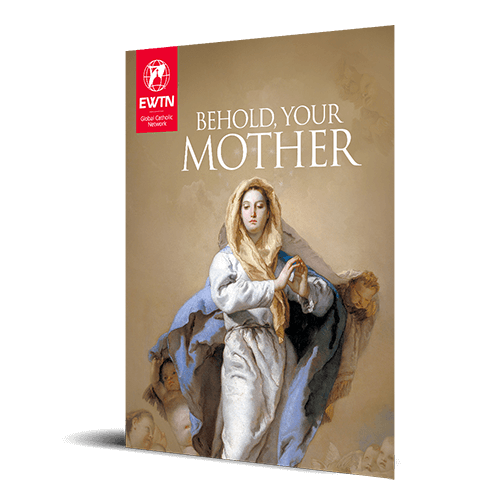
We hope this special eBook will draw you closer to our Blessed Mother and her Son, Jesus Christ. We trust that the following pages will bring your heart under her mantle, as we share a few of the beautiful and befitting names bestowed upon the Blessed Virgin Mary.
As we deepen our relationship with the Eternal Word, Jesus Christ, we grow in grace and are transformed by His love and mercy.
STEP 1
We’re here to serve you. Let us help you complete your gift with confidence.

Send a message to Mission Advancement.

Guidance for DAFs, stock, IRA, and more.

Manage your gifts and preferences.