

Your Faith Journey with EWTN
As we deepen our relationship with the Eternal Word, Jesus Christ, we grow in grace and are transformed by His love and mercy.
c. 1197–April 3, 1253
Patron Saint of Coachmen; Diocese of Chichester, Sussex, England

St. Richard of Chichester exemplified integrity and perseverance. Born around 1197 into poverty, he cared for his siblings after his parents died. Determined, he pursued education at Oxford, Paris, and Bologna through discipline and sacrifice.
St. Richard later served as chancellor to St. Edmund, Archbishop of Canterbury. Under St. Edmund’s guidance, St. Richard deepened his spirituality and was ordained a priest. His principles soon placed him at the center of a Church-political conflict.
In 1245, St. Richard was elected Bishop of Chichester. King Henry III, who supported another candidate, rebelled by seizing Church revenues and forcing St. Richard into exile. During this period, St. Richard lived in poverty, relying on friends’ hospitality while continuing his pastoral ministry. His patience and fidelity eventually prevailed. The pope threatened to excommunicate the king, and St. Richard was restored to his diocese.
As bishop, St. Richard focused on reform and renewal. He enforced statutes for clerical reform and ensured the proper administration of Church property. He was uncompromisingly generous to those in need. St. Richard also promoted devotion to the Eucharist and ensured that the Sacraments were frequently administered to the faithful.
St. Richard died on April 3, 1253, in Dover while traveling on Church business, and was canonized in 1262. Numerous miracles were reported at his tomb.
King Henry III opposed Richard’s appointment because he wished to control ecclesiastical offices and revenues. St. Richard’s loyalty to Church authority and the Church’s independence conflicted with royal interests. King Henry III strongly favored Robert Passelew, whom he believed he could control more closely to influence Church affairs. The king refused to acknowledge St. Richard as bishop. He seized the Diocese of Chichester’s revenues and properties, leaving St. Richard penniless. He forbade anyone from offering hospitality to St. Richard, who suffered many injustices. After two years of conflict, the pope threatened King Henry III with excommunication, prompting the king to finally restore the diocesan properties to St. Richard. Pope Innocent IV then confirmed the election and consecrated St. Richard as Bishop of Chichester.
The prayer commonly attributed to St. Richard expresses a desire for a deepening relationship with Christ, summarized in the lines: “to know Jesus more clearly, love Him more dearly, and follow Him more nearly.” Its significance lies in its encouragement for daily spiritual growth through consistent effort, not instant transformation. The widespread appeal of the prayer shows how simple words can inspire perseverance in faith and hope, reminding believers that closeness to God comes through small, genuine steps repeated each day that conform one’s mind, heart, and actions to Christ.
Thanks be to thee, my Lord Jesus Christ,
for all the benefits thou hast given me,
for all the pains and insults thou hast borne for me.
O most merciful redeemer, friend and brother,
may I know thee more clearly,
love thee more dearly,
and follow thee more nearly, day by day.
Amen.
St. Richard of Chichester cared for the poor by living frugally and giving away his possessions. He sold gold and silver items to provide alms for those in need. He also cared for the spiritual well-being of the people. He visited the needy, ensuring the Church served the poor through mandated free Sacraments and education, while fighting for their rights against powerful figures such as the king. Once, the diocesan accountant pointed out that revenues were lower than the amount of alms he was distributing. He ordered more alms to be given out, saying, “Then sell my plate and my horse. Perhaps God has sent us this loss to punish our covetousness.” St. Richard was known as a strong advocate for social justice, addressing both the spiritual and material needs of the marginalized. His personal example encouraged clergy and laity alike to practice generosity and compassion.
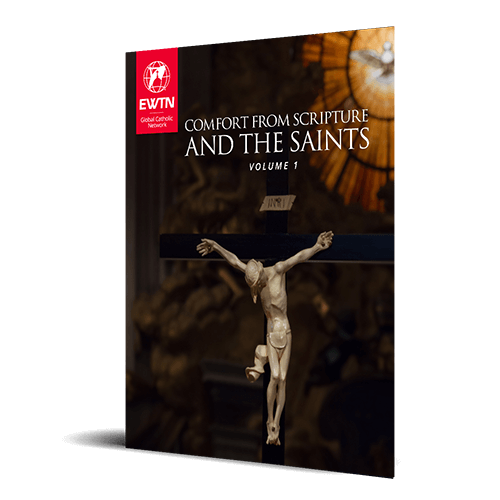
This eBook combines stunning photography from EWTN’s Vatican Bureau along with Bible passages and saints’ quotes that will calm your heart, give you hope, and remind you that God is with us always. Simply fill out the form below and we will send this to you!
Be inspired to follow in the footsteps of the saints. Subscribe to receive the Daily Saint, featuring a brief biography delivered to your inbox each day.
Start now and let the intercession and witness of the saints draw you closer to God.

As we deepen our relationship with the Eternal Word, Jesus Christ, we grow in grace and are transformed by His love and mercy.
STEP 1
We’re here to serve you. Let us help you complete your gift with confidence.

Send a message to Mission Advancement.

Guidance for DAFs, stock, IRA, and more.

Manage your gifts and preferences.