

Your Faith Journey with EWTN
As we deepen our relationship with the Eternal Word, Jesus Christ, we grow in grace and are transformed by His love and mercy.
Died 304 A.D.

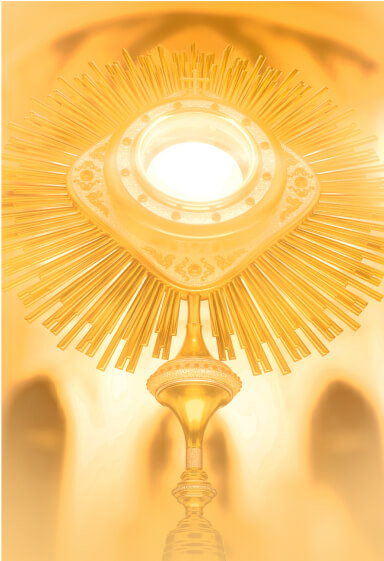
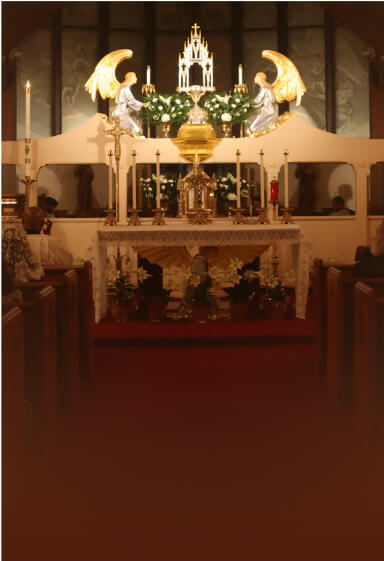
The Martyrs of Abitinae—led by St. Saturninus, a priest—were a courageous group of 49 Christians from the town of Abitinae in a Roman province of Africa who gave their lives in the early fourth century during the Diocletian persecution. Their witness is remembered primarily for their steadfast refusal to abandon the celebration of the Mass and the Holy Eucharist, which an imperial decree had explicitly forbidden.
In the year 304, Christians were required to hand over the sacred Scriptures and cease meeting for the liturgy. Saturninus and his fellow believers continued to gather in the home of a noblewoman named Octavia. When authorities raided the assembly, the entire group—including men, women, children, and their priest, Saturninus—was arrested and brought before the proconsul Anulinus in Carthage.
During interrogation, one martyr uttered the phrase: “Sine dominico non possumus.” (“Without the Lord, we cannot live.”), referring to the Holy Eucharist. These words expressed their conviction that the Eucharist was the heart of their identity and the source of Christian life. Refusing to betray the Faith, they endured brutal torture. Some were scourged or starved; others were confined in dark, suffocating prisons. All remained steadfast.
Their testimonies and deaths were recorded in the ancient Acta Saturnini. They were venerated early by the Church, and their fidelity to the Faith in the face of persecution has inspired Christians for centuries.
The Martyrs of Abitinae remind us that when we receive Our Lord in the Holy Eucharist, we encounter Christ, fully present for us. Let us pray for Catholics around the world who are persecuted and deprived of worshipping on the Lord’s Day.
The phrase “Without the Lord, we cannot live” referred to the Eucharist and the communal celebration of the Lord’s Day. This declaration, spoken by several martyrs during interrogation, expressed their conviction that the Eucharist was essential to Christian life. Their words became a hallmark of early Christian witness. An authentic early Church record known as the Proconsular Acts documents the trials and martyrdoms of the Abitinae Christians in 304 A.D. These records detail the interrogation of 49 Christians from Abitinae, a city in the Roman province of Africa (modern Tunisia), who were arrested for illegally gathering for Christian worship in defiance of Emperor Diocletian’s edicts. Other sources indicate this was a spontaneous cry from the group during their torture as well. Records report the phrase expressed as an “inner necessity” fundamental to their Christian identity, something they could not live without, even under threat of death. The detailed account of their trial, including the spontaneous cries, was preserved in the Proconsular Acts.
St. Augustine of Hippo referred to the Martyrs of Abitinae in his work De baptismo (On Baptism) around 400 or 401 A.D. He referenced them to discuss the importance of Sunday worship, a key issue in the case of these persecuted martyrs accused of illegally holding the service in violation of Roman law. St. Augustine, writing a century later, used their case to argue for the significance of continuing to hold Sunday services despite persecution. Augustine’s detailed knowledge of the date of their trial suggests he may have had access to a copy of the Proconsular Acts from their trial.
Christians in the early Church preserved the remains of martyrs to honor the sanctity of their lives. The collective witness, diversity of ages, and love for Christ and the Eucharist shown by the Martyrs of Abitinae impacted their local North African community. More widespread veneration would have occurred after the legalization of Christianity in 313 A.D. Their relics were preserved in various locations. The remains of St. Victoria, a virgin who had consecrated her life to Christ, are preserved for veneration in Maria Stein, Ohio. Other relics are housed in Rignano, Italy.
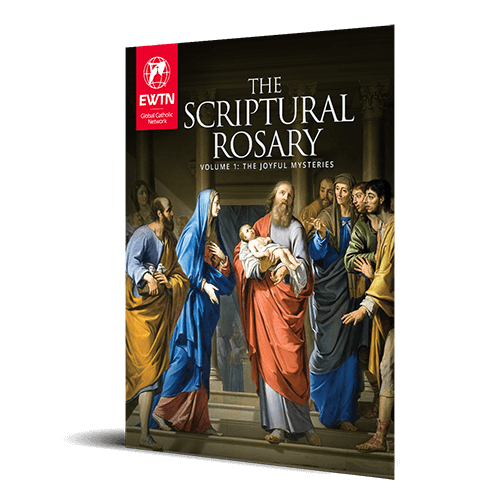
The Holy Rosary is an amazing prayer, encouraged by popes, loved by saints, and prayed by the faithful. At its heart, the Rosary is a meditation on Sacred Scripture, on the lives of Jesus and Mary.
Through this Scriptural Rosary, we hope that you will be able to better meditate on each Hail Mary and deepen your understanding of Sacred Scripture. Use the form below to get your free copy of The Scriptural Rosary.
Be inspired to follow in the footsteps of the saints. Subscribe to receive the Daily Saint, featuring a brief biography delivered to your inbox each day.
Start now and let the intercession and witness of the saints draw you closer to God.

As we deepen our relationship with the Eternal Word, Jesus Christ, we grow in grace and are transformed by His love and mercy.
STEP 1
We’re here to serve you. Let us help you complete your gift with confidence.

Send a message to Mission Advancement.

Guidance for DAFs, stock, IRA, and more.

Manage your gifts and preferences.