

Your Faith Journey with EWTN
As we deepen our relationship with the Eternal Word, Jesus Christ, we grow in grace and are transformed by His love and mercy.
December 21, 1119–December 29, 1170
Patron Saint of Exeter College at Oxford, Portsmouth, England, Arbroath Abbey, secular clergy, City of London, and St. Thomas the Martyr Church in Oxford, England

St. Thomas Becket, Archbishop of Canterbury, is remembered as a courageous defender of the Church’s ecclesial authority against the power of the royal crown. Born in London in the early twelfth century, St. Thomas was the son of a Norman merchant. He was educated in London, Paris, and Bologna.
St. Thomas’s studies were interrupted when his father died. He secured a position in the household of the Archbishop of Canterbury, where he was ordained a deacon and later elevated to the office of archdeacon. His impressive performance earned him a recommendation to the king for the position of Lord Chancellor. The king perceived St. Thomas would be a loyal ally to the crown, and the two became close friends.
In 1162, King Henry secured St. Thomas’s election as Archbishop of Canterbury. To the king’s surprise, however, St. Thomas grew in piety, dedicated himself to the Scriptures and charitable works, and embraced ascetic practices, wearing a hair shirt under his cassock. St. Thomas resigned as chancellor.
Conflict soon arose over the Constitutions of Clarendon, royal decrees that sought to limit Church authority, especially in legal matters. St. Thomas resisted, defending the Church’s rights, and tensions with King Henry escalated.
St. Thomas was forced into exile in France for several years. Both parties continued negotiations to resolve their differences through the mediation of the pope’s representatives. St. Thomas eventually returned to England in 1170. Soon, the two men were at odds again. That December, knights loyal to King Henry interpreted the king’s angry words as a command to murder Becket. They confronted him at Canterbury Cathedral, striking him down at the altar.
His martyrdom shocked Christendom and quickly made him one of the most venerated saints of the Middle Ages. Many visited his shrine in Canterbury, and St. Thomas’s story was immortalized in song and literature, such as Chaucer’s Canterbury Tales.
St. Thomas Becket was canonized by Pope Alexander II in 1173, and his shrine at Canterbury became a primary pilgrimage site.
King Henry II wanted more control over the Church. The Constitutions of Clarendon were legislative procedures that would allow him to try clergy who committed serious crimes and gave him authority to elect bishops and abbots to fill positions within the Church. St. Thomas was strongly opposed to these procedures. He believed that the Church should have exclusive authority over its clergy.
The monks preserved St. Thomas’s remains at Canterbury Cathedral. During the 1200s, his relics were housed in various locations. In 1220, the relics were moved from his original tomb at Canterbury Cathedral to a new shrine. His relics were returned to Canterbury after the destruction of the shrine in 1538. Some additional relics have been returned over the years.
The knights who murdered St. Thomas Becket fled the scene of their crime and traveled to the north of England. While the king did not arrest them, he also did not assist or advise them. The pope excommunicated them, but they went to Rome seeking forgiveness. The pope sentenced them to serve 14 years as knights in the Holy Land during the Crusades.
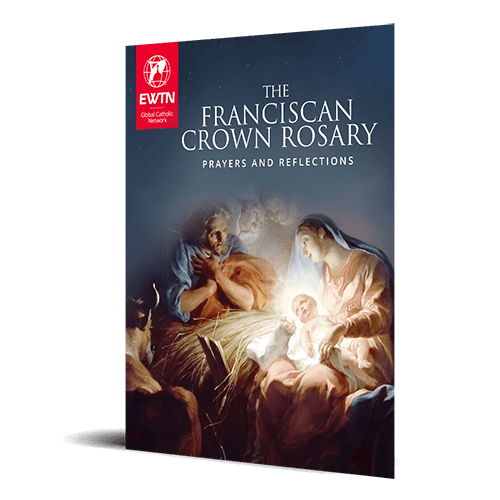
One unique devotion of the Franciscans is a seven-decade rosary known as the Franciscan Crown. While the traditional rosary consists of 5 decades which meditate on 15 mysteries, the 7-decade Franciscan Rosary, known as the Franciscan Crown, is a Rosary consisting of seven decades with each decade describing a particular joy from the life of the Blessed Virgin Mary. We hope that this special resource will help you meditate on each of the Seven Joys of Our Blessed Mother Mary.
Explore historic London and walk in the footsteps of St. Thomas Becket, whose remarkable life and heroic death were followed by an overflowing of grace and miraculous events.
Be inspired to follow in the footsteps of the saints. Subscribe to receive the Daily Saint, featuring a brief biography delivered to your inbox each day.
Start now and let the intercession and witness of the saints draw you closer to God.

As we deepen our relationship with the Eternal Word, Jesus Christ, we grow in grace and are transformed by His love and mercy.
STEP 1
We’re here to serve you. Let us help you complete your gift with confidence.

Send a message to Mission Advancement.

Guidance for DAFs, stock, IRA, and more.

Manage your gifts and preferences.