

Your Faith Journey with EWTN
As we deepen our relationship with the Eternal Word, Jesus Christ, we grow in grace and are transformed by His love and mercy.
Born 200-230–Died 222-235
Patron Saint of sacred music, organ builders, luthiers, singers, musicians, poets

St. Cecilia was born into a pagan noble family in the third century and was exposed to Christian beliefs from childhood. Her profound faith and devotion to Christ converted her pagan husband and brother-in-law, who then converted their jailer.
You have probably heard St. Cecilia’s name mentioned during the Canon of the Mass. She is one of the most well-known virgin martyrs of the early Church. Although historical details are scarce, the Basilica of St. Cecilia in Rome is believed to mark the site of her home.
St. Cecilia was a young Roman woman born to a noble family in the third century who, according to tradition, was given in marriage to Valerian, a pagan noble. On their wedding night, she revealed that she had pledged to God to remain a virgin, claiming that an angel guarded her purity. She vowed to love Valerian if he respected her virginity.
When Valerian demanded to see the angel, St. Cecilia replied, “If you believe in the one true and living God and receive the water of baptism, then you shall see the angel.” Valerian accepted St. Cecilia’s condition and received baptism. Upon his return, he saw the angel and became a Christian along with his brother, Tiburtius. The two brothers were devoted to good works in the Christian community and became known for burying the remains of martyrs of the faith.
The Roman Emperor had Valerian and Tiburtius arrested and later martyred for their beliefs. Their powerful witness to the Faith converted their jailer, Maximus, who was executed along with them. St. Cecilia was arrested and condemned to death. Accounts describe her surviving attempts at suffocation and being struck with a sword at the neck. However, the head was not completely severed, and she died three days later. Even in her final suffering, she gave witness to her unwavering love for Christ.
St. Cecilia remains a model of courage, purity, and faithful devotion. Over the centuries, St. Cecilia has been honored as the patroness of music, symbolizing the song of her heart she offered to God on her wedding night.
During her wedding ceremony, St. Cecilia sang a song to God in her heart. The song in her heart represented her deep devotion to God and inspired later generations to associate her with musical works.
In the Middle Ages, artists portrayed her with musical instruments, and composers wrote music in her honor, inspiring hearts and contributing to her enduring legacy.
St. Cecilia’s heroic martyrdom is a powerful witness to her unwavering faith. Roman soldiers attempted to behead St. Cecilia after the initial execution attempt by suffocation failed. The executioner struck her neck but could not sever her head, leaving her mortally wounded but alive.
Accounts of her last days indicate that St. Cecilia gave all her remaining possessions to the poor before her death and designated her home as a place for Christian worship. The Basilica di Santa Cecilia in Trastevere was built on this site. Initially buried in the catacombs, St. Cecilia’s relics were moved centuries later, and her body was found incorrupt. This visible sign of her sanctity encouraged the faith of many.
The Basilica of Santa Cecilia in Trastevere, Rome, located on the site of St. Cecilia’s former residence, was built in the 4th century. Pope Paschal had her relics moved from the catacombs and rebuilt the church over her home in the 9th century.
In 1599, during a renovation, her tomb was opened and, miraculously, her body was discovered incorrupt. The basilica houses the miraculously preserved relics of the saint. As a major pilgrimage site, the basilica draws musicians from around the world to celebrate St. Cecilia’s feast day on November 22.
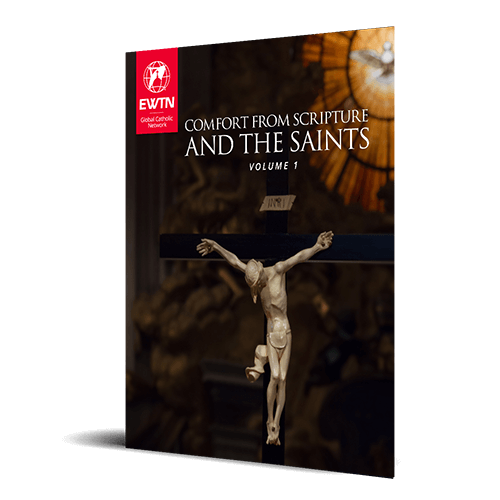
This eBook combines stunning photography from EWTN’s Vatican Bureau along with Bible passages and saints’ quotes that will calm your heart, give you hope, and remind you that God is with us always. Simply fill out the form below and we will send this to you!
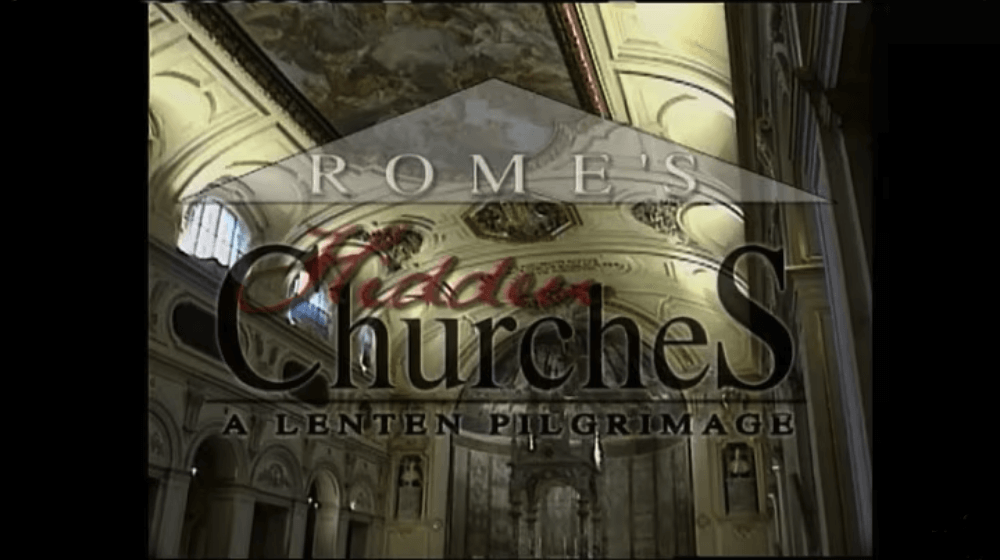


Rome’s Hidden Churches – Saint Cecilia
Be inspired to follow in the footsteps of the saints. Subscribe to receive the Daily Saint, featuring a brief biography delivered to your inbox each day.
Start now and let the intercession and witness of the saints draw you closer to God.

As we deepen our relationship with the Eternal Word, Jesus Christ, we grow in grace and are transformed by His love and mercy.
STEP 1
We’re here to serve you. Let us help you complete your gift with confidence.

Send a message to Mission Advancement.

Guidance for DAFs, stock, IRA, and more.

Manage your gifts and preferences.